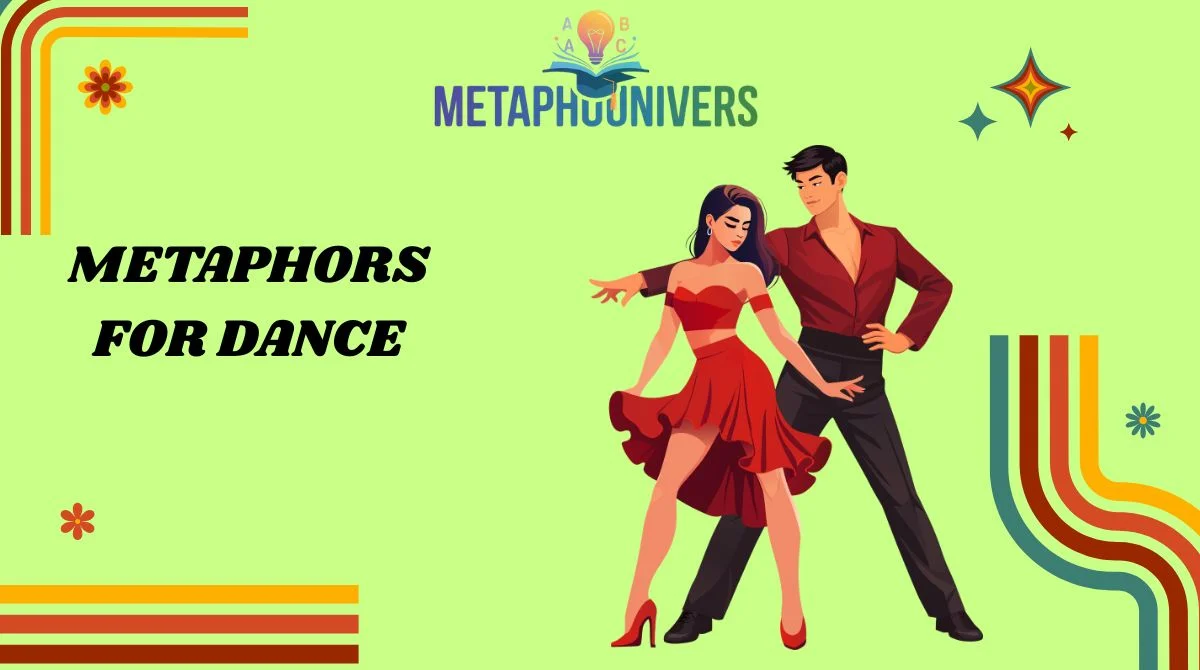
Dance is more than movement—it’s a language of the soul. Metaphors, the literary tools that compare one thing to another without using “like” or “as,” turn ordinary descriptions into vivid imagery.
When applied to dance, metaphors capture rhythm, emotion, and energy in ways literal words cannot. They allow readers and audiences to feel the sway of a waltz, the fire of a flamenco, or the weightlessness of contemporary flow.
Dance metaphors are especially powerful because they bridge the physical and emotional, translating motion into thought, feeling, and symbol.
They evoke joy, tension, passion, and serenity in ways simple description often cannot. From poetry to storytelling, speeches to essays, metaphorical language elevates writing, creating a sensory experience that resonates.
In essence, dance metaphors transform the ephemeral art of movement into lasting imagery, allowing words to pirouette as gracefully as the dancers they describe.
Understanding the Symbolism of Dance
Dance carries layers of meaning beyond the visible steps. Emotionally, it is freedom, joy, grief, or longing manifested physically. Psychologically, movement mirrors internal states—spinning can signify dizziness or confusion, leaps represent aspiration, and grounded footwork conveys stability or restraint.
Culturally, dance embodies tradition, ritual, and identity. From the precise gestures of classical ballet to the expressive improvisation of street dance, it tells stories of heritage, community, and resistance. In literature, dance often symbolizes transformation, release, or courtship, acting as a bridge between physical action and emotional or spiritual states. Metaphors for dance, therefore, amplify these layers, allowing writers to suggest emotion and narrative depth simultaneously.
Nature-Based Metaphors
Dance as a River
Meaning & Interpretation: Dance flows with unstoppable motion, shifting currents representing emotion.
Best Used In: Poetry, storytelling
Example Sentence: Her movements were a river, winding through the crowded stage, unstoppable and graceful.
Why It Works: The imagery of water evokes fluidity, continuity, and natural rhythm.
Dance as a Storm
Meaning & Interpretation: Expresses intensity, chaos, and energy in motion.
Best Used In: Speeches, dramatic writing
Example Sentence: His feet struck the floor like thunder; the room became a storm.
Why It Works: Conveys raw power and emotional turbulence, appealing to auditory and visual senses.
Dance as Autumn Leaves
Meaning & Interpretation: Evokes grace, lightness, and transient beauty.
Best Used In: Poetry, descriptive essays
Example Sentence: She spun like autumn leaves caught in a gentle wind.
Why It Works: The metaphor conveys ephemeral elegance, highlighting both movement and mood.
Emotional Metaphors
Dance as Laughter
Meaning & Interpretation: Joyful, contagious, and free-spirited movement.
Best Used In: Storytelling, essays
Example Sentence: Their dance erupted like laughter, infecting everyone around.
Why It Works: Connects movement with emotional resonance, creating warmth and relatability.
Dance as a Heartbeat
Meaning & Interpretation: Reflects rhythm, life force, and emotional pulse.
Best Used In: Poetry, speeches
Example Sentence: Her feet drummed the floor like a heartbeat, steady and alive.
Why It Works: Ties physical rhythm to universal human experience, deepening reader empathy.
Dance as a Smile
Meaning & Interpretation: Radiates warmth, openness, and delight.
Best Used In: Short stories, personal essays
Example Sentence: Every twirl was a smile painted in motion.
Why It Works: Anthropomorphizes movement, evoking a tender, approachable image.
Dark/Intense Metaphors
Dance as Fire
Meaning & Interpretation: Represents passion, danger, or destruction.
Best Used In: Poetry, dramatic narratives
Example Sentence: Her movements were fire, consuming the stage with every step.
Why It Works: Fire conveys intensity, unpredictability, and transformative energy.
Dance as Shadows
Meaning & Interpretation: Suggests mystery, secrecy, or haunting beauty.
Best Used In: Gothic stories, suspense writing
Example Sentence: The dancers moved like shadows, barely touching the light.
Why It Works: The metaphor emphasizes subtlety and intrigue.
Dance as a Knife
Meaning & Interpretation: Sharp, precise, and cuttingly emotional.
Best Used In: Modern poetry, intense narratives
Example Sentence: Each movement sliced the air like a knife through silk.
Why It Works: Highlights precision and potential danger, creating tension in imagery.
Hopeful/Positive Metaphors
Dance as Sunshine
Meaning & Interpretation: Brings warmth, illumination, and optimism.
Best Used In: Motivational speeches, poetry
Example Sentence: Her steps were sunshine spilling across the room.
Why It Works: Evokes positivity and energy, instantly uplifting the audience.
Dance as Flight
Meaning & Interpretation: Represents liberation, aspiration, and transcendence.
Best Used In: Poetry, inspirational essays
Example Sentence: She leaped as if her feet had wings; every spin was a flight.
Why It Works: Conveys freedom and weightlessness, turning movement into metaphorical escape.
Dance as a Bridge
Meaning & Interpretation: Connects people, moments, or emotions.
Best Used In: Speeches, reflective essays
Example Sentence: Each step was a bridge between hearts, silent but strong.
Why It Works: Illustrates relational or emotional connections through motion.
Poetic & Romantic Metaphors
Dance as a Whisper
Meaning & Interpretation: Intimate, delicate, and evocative.
Best Used In: Romantic poetry, character-driven stories
Example Sentence: Their hands moved like whispers, soft and secretive.
Why It Works: Conveys subtlety and closeness, creating a tender atmosphere.
Dance as a Star
Meaning & Interpretation: Shimmering, aspirational, and awe-inspiring.
Best Used In: Poetry, essays celebrating creativity
Example Sentence: Her twirls were stars falling across the midnight floor.
Why It Works: Evokes wonder and beauty, linking motion to cosmic imagery.
Dance as a Flame of Two Souls
Meaning & Interpretation: Romantic synergy and shared energy.
Best Used In: Fiction, poetry
Example Sentence: They moved as one, a flame of two souls entwined in rhythm.
Why It Works: Suggests unity and emotional intensity through visual and tactile imagery.
Dramatic & Powerful Metaphors
Dance as War
Meaning & Interpretation: Combines strategy, tension, and power.
Best Used In: Dramatic storytelling, performance critique
Example Sentence: Every stomp was a soldier, every leap a battle cry.
Why It Works: Intensifies energy, dramatizing movement with conflict imagery.
Dance as Lightning
Meaning & Interpretation: Sudden, brilliant, and electrifying.
Best Used In: Speeches, poetry
Example Sentence: Her spin struck like lightning, breathtaking and swift.
Why It Works: Captures speed, surprise, and visual drama.
Dance as a Wave
Meaning & Interpretation: Suggests ebb and flow, strength, and continuity.
Best Used In: Essays, descriptive narratives
Example Sentence: He rose and fell like a wave, unstoppable and mesmerizing.
Why It Works: Evokes natural rhythm and fluidity, giving motion a grand scale.
How Writers Use These Metaphors
In Novels: To describe action with emotional resonance, creating immersive scenes.
In Poetry: To link physical movement to inner emotions, elevating lyrical expression.
In Speeches: To inspire, illustrate energy, or make abstract concepts tangible.
In Descriptive Essays: To enrich narrative with sensory depth, connecting readers to imagery.
Common Mistakes When Creating Metaphors
- Cliché Imagery: Avoid overused comparisons like “dance like a butterfly.”
- Mixed Metaphors: Keep imagery consistent; conflicting metaphors confuse readers.
- Overcomplication: Don’t stretch the metaphor to the point of incomprehensibility.
- Repetition Patterns: Use varied language and fresh imagery to maintain impact.
Practice Exercise
Fill in the blanks:
- Her movements were __________, flowing endlessly like __________.
- He danced like __________, powerful and unpredictable.
- Each step was __________, echoing __________.
- Their spins were __________, reflecting __________.
- Dance whispered __________ across __________.
- She moved like __________, delicate yet __________.
- The rhythm was __________, carrying __________.
- His feet struck the floor like __________, __________.
- Their choreography was __________, __________.
- Each gesture was __________, __________.
Create your own metaphor:
- Describe dance as a weather phenomenon.
- Compare a dancer’s movement to a celestial body.
- Express a dance full of passion using an element from nature.
- Use an emotion to metaphorically describe a spin or leap.
- Imagine dance as a conversation—what does it say?
People Also Ask
What is a metaphor for dance?
A metaphor for dance is a figurative expression comparing dance to something else, like a river, fire, or heartbeat, to convey emotion, rhythm, or imagery.
How do writers use dance metaphors in literature?
Writers use dance metaphors to express emotion, character states, or cultural symbolism, turning physical movement into narrative depth.
Can dance metaphors describe emotions?
Yes. Dance metaphors often reflect joy, passion, tension, freedom, or sorrow, linking movement with emotional resonance.
What are some unique dance metaphors for poetry?
Examples include dance as lightning, a bridge, a whisper, a wave, or autumn leaves, offering vivid, imaginative imagery.
Why are dance metaphors effective in writing?
They convey motion, energy, and emotion simultaneously, creating immersive, memorable, and emotionally resonant language.
Conclusion
Dance metaphors allow words to pirouette, leap, and soar, transforming simple motion into profound imagery.
Writers who embrace metaphorical language give their descriptions life, rhythm, and soul. Experiment with nature, emotion, intensity, and romance—let your metaphors move as freely as the dancers they portray.

I am David Cooper, an English language enthusiast and content creator at Metaphounivers, dedicated to simplifying grammar and vocabulary for learners worldwide. I help students build confidence and improve their communication skills through clear, practical lessons.