A metaphor is more than comparison—it is transformation. When we say someone is a storm waiting to break, we are not describing weather;
we are revealing emotion through image. Metaphors give language its pulse. They turn invisible feelings into visible experiences.
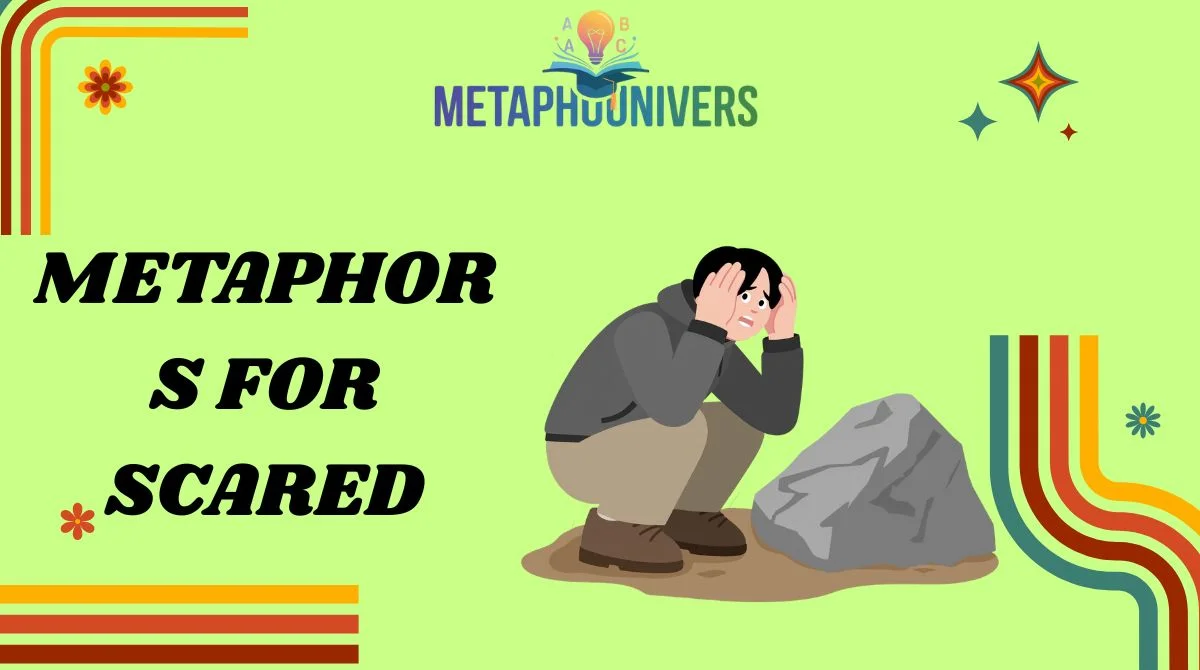
When writing about being scared, literal descriptions often fall flat. Saying “she was afraid” tells the reader very little.
But describing fear as a rabbit cornered by thunder or a candle trembling in cathedral wind invites readers to feel the fear.
Metaphors for scared are powerful because fear is one of humanity’s most universal emotions. It shapes survival, memory, instinct, and imagination.
Symbolically, fear represents vulnerability, uncertainty, and confrontation with the unknown. Emotionally, it tightens muscles, sharpens awareness, and magnifies risk. Through metaphor, writers can express subtle panic, quiet dread, or explosive terror with elegance and originality.
This guide will give you deeply creative, non-cliché metaphors that elevate storytelling, poetry, speeches, and essays—crafted for modern writers who want impact in 2k26 and beyond.
Understanding the Symbolism of Fear
Emotional Meaning
Fear signals danger—real or imagined. It can represent fragility, anticipation, guilt, or even awe. Sometimes fear whispers; sometimes it roars. Emotionally, it’s the body’s alarm system, a tightening drumbeat beneath calm surfaces.
Psychological Associations
Psychologically, fear connects to survival instincts. It activates fight, flight, freeze, or fawn responses. In literature, fear often symbolizes inner conflict—doubt before change, hesitation before courage, or trauma revisiting the present.
Cultural Symbolism
Across cultures, fear is often linked to darkness, shadows, storms, predators, or the unknown. Folklore turns fear into monsters. Myths transform it into trials heroes must overcome. Fear frequently marks the threshold between innocence and growth.
Literary Usage
Writers use fear metaphorically to:
- Build suspense
- Reveal character vulnerability
- Signal transformation
- Heighten atmosphere
When crafted thoughtfully, metaphors for scared deepen emotional immersion rather than merely describing it.
Nature-Based Metaphors
A Deer Frozen in Headlights
Meaning & Interpretation: Represents sudden, paralyzing fear when escape feels impossible.
Best Used In: Suspense fiction, survival narratives
Example Sentence: He stood like a deer frozen in headlights, unable to answer the accusation.
Why It Works: The imagery evokes instinctive paralysis and exposure in a threatening moment.
A Tree Shuddering Before Lightning
Meaning & Interpretation: Anticipatory fear—knowing impact is coming but not when.
Best Used In: Dramatic monologues, reflective essays
Example Sentence: She waited for the verdict, a tree shuddering before lightning.
Why It Works: Suggests vulnerability and inevitability without stating danger directly.
A Rabbit Listening to the Rustle
Meaning & Interpretation: Hyper-awareness and alert tension.
Best Used In: Psychological thrillers, intimate poetry
Example Sentence: His thoughts darted like a rabbit listening to the rustle behind it.
Why It Works: Conveys fragility and heightened senses simultaneously.
A Shoreline Before the Tsunami
Meaning & Interpretation: Calm surface masking impending devastation.
Best Used In: Tragic storytelling, emotional conflict scenes
Example Sentence: Her smile was the shoreline before the tsunami.
Why It Works: Suggests quiet dread before overwhelming force.
Emotional Metaphors
A Heart Drumming in a Locked Room
Meaning & Interpretation: Claustrophobic panic and internal noise.
Best Used In: First-person narratives
Example Sentence: My heart was drumming in a locked room with no windows.
Why It Works: Combines confinement with physiological reaction.
A Secret About to Be Exposed
Meaning & Interpretation: Fear of vulnerability or revelation.
Best Used In: Drama, coming-of-age stories
Example Sentence: She felt like a secret about to be exposed.
Why It Works: Captures social fear rather than physical danger.
Glass About to Crack
Meaning & Interpretation: Fragility under pressure.
Best Used In: Character-driven fiction
Example Sentence: He held himself like glass about to crack.
Why It Works: Evokes tension through delicate imagery.
A Note Held Too Long
Meaning & Interpretation: Sustained anxiety stretching beyond comfort.
Best Used In: Literary prose, speeches
Example Sentence: The silence was a note held too long in the orchestra of the room.
Why It Works: Musical metaphor conveys tension without violence.
Dark & Intense Metaphors
A Candle in a Hurricane
Meaning & Interpretation: Powerlessness against overwhelming forces.
Best Used In: Epic storytelling
Example Sentence: She felt like a candle in a hurricane of accusations.
Why It Works: Sharp contrast between fragility and force intensifies fear.
A Prisoner of Shadow
Meaning & Interpretation: Psychological entrapment.
Best Used In: Gothic fiction, introspective poetry
Example Sentence: He walked as a prisoner of shadow, chained by his doubts.
Why It Works: Suggests fear that originates within.
A Clock Ticking Underwater
Meaning & Interpretation: Suffocating urgency.
Best Used In: Thriller scenes
Example Sentence: Time felt like a clock ticking underwater.
Why It Works: Combines pressure and distortion for sensory impact.
A House With No Doors
Meaning & Interpretation: Inescapable dread.
Best Used In: Horror or symbolic essays
Example Sentence: Her mind became a house with no doors.
Why It Works: Symbolizes entrapment without explicit threat.
Hopeful & Transformational Metaphors
A Seed Beneath Heavy Soil
Meaning & Interpretation: Fear preceding growth.
Best Used In: Motivational writing
Example Sentence: His fear was a seed beneath heavy soil, waiting to break through.
Why It Works: Connects anxiety with potential transformation.
A Diver Before the Leap
Meaning & Interpretation: Fear mixed with anticipation.
Best Used In: Inspirational speeches
Example Sentence: She stood at the edge like a diver before the leap.
Why It Works: Suggests courage intertwined with fear.
A Storm Learning to Clear
Meaning & Interpretation: Temporary fear that will pass.
Best Used In: Reflective essays
Example Sentence: His panic was a storm learning to clear.
Why It Works: Offers emotional progression within imagery.
Ink Trembling Before Becoming Words
Meaning & Interpretation: Creative fear before expression.
Best Used In: Writing-themed prose
Example Sentence: My thoughts were ink trembling before becoming words.
Why It Works: Connects vulnerability to creation.
A Bridge Swaying Over a Canyon
Meaning & Interpretation: Risk combined with forward movement.
Best Used In: Personal growth narratives
Example Sentence: She felt like a bridge swaying over a canyon—but she crossed anyway.
Why It Works: Balances instability with courage.
How Writers Use These Metaphors
In novels, metaphors for scared deepen atmosphere and reveal character psychology without stating emotion directly.
In poetry, they compress emotion into a single vivid image. A metaphor can replace paragraphs of explanation.
In speeches, fear metaphors connect with audiences universally—especially when transitioning toward hope or courage.
In descriptive essays, metaphors elevate ordinary scenes into emotionally charged experiences.
Common Mistakes When Creating Metaphors
Cliché imagery – Avoid overused phrases like “heart pounding like a drum” unless reimagined uniquely.
Mixed metaphors – Don’t combine incompatible images (e.g., “a storm of flames swimming in silence”).
Overcomplication – If readers must decode excessively, impact weakens.
Repetition patterns – Using the same type of imagery repeatedly dulls creativity. Vary emotional textures.
Practice Exercise
Fill in the Blanks
- She felt like a ______ in a room full of mirrors.
- His fear was a ______ waiting beneath calm water.
- I stood there, a ______ before the curtain rose.
- Her voice trembled like a ______ in wind.
- The hallway stretched like a ______ at midnight.
- My thoughts scattered like ______.
- He became a ______ under watchful eyes.
- The silence pressed like a ______.
- Her courage flickered like a ______.
- The truth loomed like a ______.
Create Your Own
- Create a metaphor for fear before public speaking.
- Write one for childhood fear.
- Create one for silent, hidden fear.
- Write one for fear that leads to bravery.
- Create a metaphor for collective fear in a crowd.
FAQs
What is a metaphor for being scared?
A metaphor for being scared compares fear to something vivid—like a candle in a hurricane—to express emotion indirectly.
Why are metaphors better than saying “I was scared”?
They create imagery that readers feel rather than simply understand intellectually.
Can metaphors for fear be positive?
Yes. Fear can symbolize growth, transformation, and courage when framed constructively.
How do I avoid cliché fear metaphors?
Draw from specific experiences and unexpected imagery rather than common comparisons.
Are metaphors useful in academic essays?
When used appropriately, they clarify abstract ideas and enhance persuasive impact.
Conclusion
Fear is one of language’s richest emotional landscapes. Through metaphor, it becomes wind, glass, shadow, bridge, seed. Instead of stating fear plainly, transform it.
Let it breathe through imagery. Let it carry rhythm.
Great writers do not describe emotion—they embody it.
Use these metaphors as inspiration, but craft your own. The most powerful imagery comes from lived experience filtered through imagination.
Write boldly. Even if your pen trembles.

I am David Cooper, an English language enthusiast and content creator at Metaphounivers, dedicated to simplifying grammar and vocabulary for learners worldwide. I help students build confidence and improve their communication skills through clear, practical lessons.