A metaphor is more than decorative language—it is a bridge between the visible world and invisible emotion.
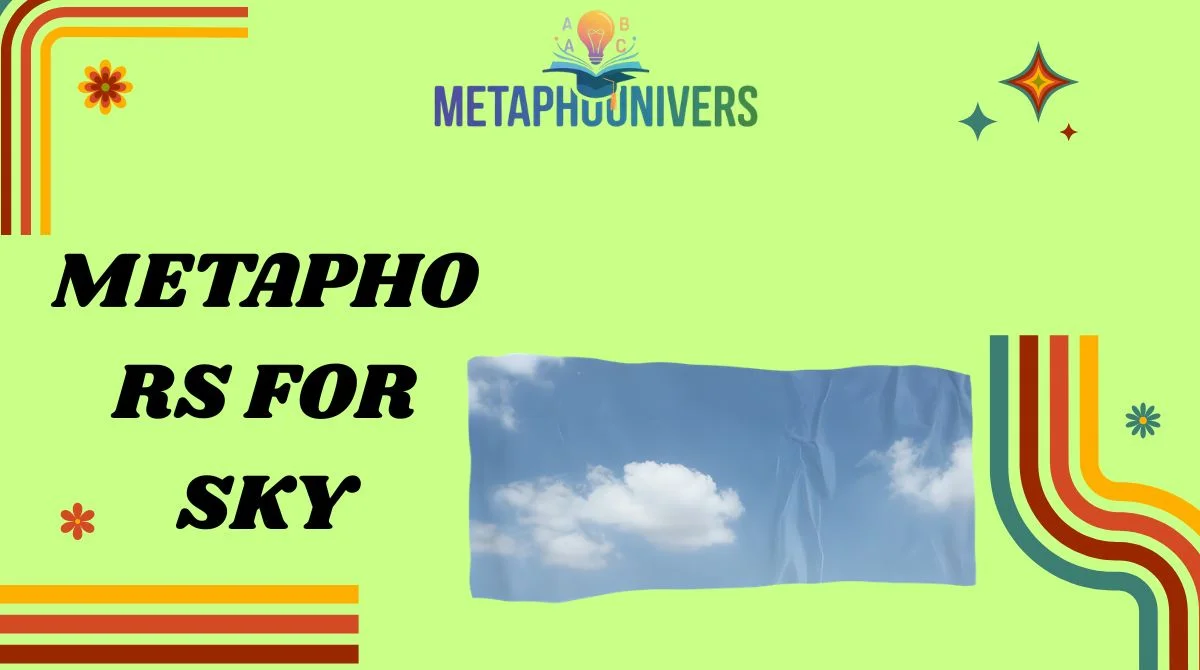
When we describe one thing as another, we invite readers to see beyond surface reality. The sky, vast and ever-changing, offers one of the richest canvases for metaphor in literature.
Writers turn to the sky because it reflects human experience so effortlessly. It can mirror hope, grief, ambition, uncertainty, serenity, or chaos.
Its openness suggests possibility. Its storms echo conflict. Its horizons promise transformation. From ancient myths to contemporary novels, the sky has symbolized freedom, destiny, divine presence, and inner turmoil.
When you master metaphors for the sky, you gain a powerful storytelling tool. Whether you’re crafting poetry, shaping a speech, or adding depth to fiction, sky imagery adds emotional altitude.
In this guide, you’ll discover fresh, original metaphors designed to spark imagination and expand your creative range.
Understanding the Symbolism of Sky
Emotional Meaning
The sky often reflects mood. Clear skies suggest clarity or renewal. A turbulent sky may embody unrest. Twilight skies capture transition—the emotional space between endings and beginnings.
Psychological Associations
Psychologically, the sky represents openness and expansion. It evokes the unconscious, limitless thought, and even transcendence. Looking upward encourages reflection, aspiration, and wonder.
Cultural Symbolism
Across cultures, the sky is linked to divinity, authority, and cosmic order. Ancient civilizations worshipped sky deities. In literature, it frequently symbolizes fate, power, or the overarching force that shapes human lives.
Literary Usage
Writers use the sky to:
- Foreshadow events
- Reflect a character’s emotional state
- Establish atmosphere
- Emphasize themes of freedom, isolation, or destiny
Because it stretches beyond reach, the sky naturally invites metaphorical interpretation.
Nature-Based Metaphors
The Sky Is an Ocean Without Shores
Meaning & Interpretation: Suggests boundlessness and depth.
Best Used In: Epic storytelling, travel writing, philosophical essays
Example Sentence: The sky above the desert was an ocean without shores, waves of light rolling endlessly.
Why It Works: It replaces water with air, evoking vastness while maintaining fluid imagery.
The Sky Is a Canvas of Wandering Light
Meaning & Interpretation: Implies artistry and transformation.
Best Used In: Descriptive prose, reflective poetry
Example Sentence: At dawn, the sky became a canvas of wandering light, brushed with quiet gold.
Why It Works: It highlights movement and creativity without relying on overused sunset clichés.
The Sky Is a Cathedral Ceiling
Meaning & Interpretation: Suggests sacred grandeur and reverence.
Best Used In: Spiritual writing, dramatic scenes
Example Sentence: The mountain valley rested beneath a cathedral ceiling of blue.
Why It Works: It connects architecture and divinity, elevating the setting.
The Sky Is a Migrating Tapestry
Meaning & Interpretation: Emphasizes constant motion and seasonal change.
Best Used In: Nature essays, lyrical fiction
Example Sentence: Clouds stitched themselves across the migrating tapestry above.
Why It Works: “Tapestry” suggests texture and craftsmanship, while “migrating” keeps it alive.
Emotional Metaphors
The Sky Is a Silent Witness
Meaning & Interpretation: Represents memory and endurance.
Best Used In: Historical fiction, memoir
Example Sentence: The sky stood as a silent witness to their farewell.
Why It Works: It personifies the sky without exaggeration.
The Sky Is an Unwritten Letter
Meaning & Interpretation: Suggests anticipation and possibility.
Best Used In: Romantic prose, coming-of-age stories
Example Sentence: She stared at the unwritten letter of the sky, waiting for courage.
Why It Works: It connects openness with potential narrative.
The Sky Is a Mirror of the Heart
Meaning & Interpretation: Reflects internal emotion.
Best Used In: Poetry, introspective essays
Example Sentence: His grief darkened the sky, a mirror of the heart he carried.
Why It Works: The reflection concept deepens emotional resonance.
The Sky Is a Breath Held Too Long
Meaning & Interpretation: Conveys tension or anticipation.
Best Used In: Suspense scenes
Example Sentence: Before the storm broke, the sky felt like a breath held too long.
Why It Works: It links atmosphere to human physiology.
Dark and Intense Metaphors
The Sky Is a Cracked Shield
Meaning & Interpretation: Suggests vulnerability and fractured protection.
Best Used In: War scenes, dystopian fiction
Example Sentence: Lightning tore through the cracked shield above them.
Why It Works: The imagery combines defense with destruction.
The Sky Is a Bruised Giant
Meaning & Interpretation: Implies pain on a colossal scale.
Best Used In: Tragic narratives
Example Sentence: At dusk, the bruised giant of the sky loomed overhead.
Why It Works: Personification intensifies the emotional impact.
The Sky Is a Locked Door
Meaning & Interpretation: Symbolizes restriction or unanswered longing.
Best Used In: Dramatic monologues, existential writing
Example Sentence: He searched the locked door of the sky for an answer.
Why It Works: The barrier imagery reflects emotional confinement.
The Sky Is a Shattered Clock
Meaning & Interpretation: Represents chaos or disrupted time.
Best Used In: Experimental fiction
Example Sentence: Thunder echoed like pieces of a shattered clock falling through the sky.
Why It Works: It links time and space in a striking visual.
Hopeful and Positive Metaphors
The Sky Is an Open Gate
Meaning & Interpretation: Suggests opportunity and welcome.
Best Used In: Motivational speeches
Example Sentence: With graduation behind them, the sky was an open gate.
Why It Works: The gate image implies forward movement.
The Sky Is a Rising Promise
Meaning & Interpretation: Embodies renewal.
Best Used In: Inspirational writing
Example Sentence: Each sunrise felt like a rising promise written in light.
Why It Works: It ties hope directly to daily cycles.
The Sky Is a Field of Possibility
Meaning & Interpretation: Connects ambition with expansion.
Best Used In: Goal-setting essays
Example Sentence: For the young inventor, the sky was a field of possibility.
Why It Works: “Field” suggests growth and cultivation.
The Sky Is a Lantern of Tomorrow
Meaning & Interpretation: Suggests guidance and illumination.
Best Used In: Reflective fiction
Example Sentence: She walked forward beneath the lantern of tomorrow.
Why It Works: It merges light with forward vision.
The Sky Is a Song Without End
Meaning & Interpretation: Evokes continuity and harmony.
Best Used In: Lyrical writing
Example Sentence: Above the coastline, the sky hummed like a song without end.
Why It Works: Musical imagery adds emotional texture.
How Writers Use These Metaphors
In novels, sky metaphors often mirror a protagonist’s internal arc.
In poetry, they compress complex emotions into vivid imagery.
In speeches, they inspire audiences with symbols of expansion and destiny.
In descriptive essays, they transform ordinary settings into emotionally charged landscapes.
Common Mistakes When Creating Metaphors
Cliché Imagery
Avoid predictable phrases like “blanket of stars” unless you reinvent them.
Mixed Metaphors
Don’t describe the sky as both a burning furnace and a frozen ocean in the same passage.
Overcomplication
If readers must decode your metaphor like a puzzle, it loses emotional immediacy.
Repetition Patterns
Vary your imagery. Don’t repeatedly compare the sky to fabric, for instance.
Practice Exercise
Fill in the Blanks
- The sky was a __________ stretching beyond regret.
- At dawn, the sky became a __________ of quiet beginnings.
- Before the news arrived, the sky felt like a __________.
- The storm turned the sky into a __________.
- Graduation made the sky seem like a __________.
- In grief, the sky resembled a __________.
- The desert sky was a __________ above the dunes.
- Her dreams rose into the sky like a __________.
- The city lights made the sky a __________.
- The horizon shimmered like a __________.
Create Your Own Metaphor
- Compare the sky to an object found in a house.
- Compare the sky to a human emotion.
- Compare the sky to a musical instrument.
- Compare the sky to a historical symbol.
- Compare the sky to a technological invention.
FAQs
What is a good metaphor for the sky in poetry?
A strong metaphor connects the sky to emotion or transformation, such as “the sky is a rising promise.”
Why do writers compare emotions to the sky?
Because the sky mirrors change, scale, and unpredictability—qualities shared by human feelings.
How can I avoid cliché sky metaphors?
Focus on unexpected associations. Instead of fabric imagery, try architecture, sound, machinery, or memory.
Can sky metaphors be used in academic essays?
Yes, when used sparingly to clarify abstract ideas or open introductions.
Are dark sky metaphors effective in storytelling?
Absolutely. They heighten tension and reinforce themes of conflict or uncertainty.
Conclusion
The sky remains one of literature’s most versatile symbols. It stretches across genres and moods, offering infinite room for imagination.
When you craft fresh metaphors for the sky, you’re not merely describing weather—you’re revealing emotion, theme, and perspective.
Look up. Notice color shifts, movement, silence, immensity. Then translate that experience into language that surprises and resonates.
The sky is not just above you—it is waiting to become your next unforgettable metaphor.

I am David Cooper, an English language enthusiast and content creator at Metaphounivers, dedicated to simplifying grammar and vocabulary for learners worldwide. I help students build confidence and improve their communication skills through clear, practical lessons.