A metaphor is more than a decorative phrase—it is a bridge between what we see and what we feel. By comparing one thing to another, metaphors transform ordinary description into emotional experience.
When writing about snow, metaphors become especially powerful because snow itself is layered with meaning: silence, stillness, erasure, renewal, memory, isolation, purity, danger, and wonder.
Snow is not just weather. It is atmosphere.
It reshapes landscapes, softens harsh edges, hides flaws, and rewrites the world overnight. That transformation makes it a rich symbolic tool for writers of poetry, fiction, speeches, and reflective essays.
Whether you want to express emotional numbness, spiritual cleansing, fragile beauty, or quiet devastation, snow offers fertile ground for imaginative comparisons.
In this guide, you’ll discover original metaphors for snow—carefully categorized and deeply explained—so you can use them with precision and creative confidence.
Understanding the Symbolism of Snow
Emotional Meaning
Snow often represents stillness, introspection, and suspended time. It can symbolize loneliness or comfort depending on the emotional lens of the scene. Falling snow slows the world, creating space for reflection or amplifying isolation.
Psychological Associations
Psychologically, snow suggests blankness and clarity. A snow-covered landscape resembles an untouched page—an invitation to begin again. Yet that same blankness can imply emotional distance or detachment.
Cultural Symbolism
Across cultures, snow has been tied to purification and endurance. In some traditions, winter snowfall marks hardship and resilience. In others, it represents sacred silence and transformation.
Literary Usage
In literature, snow often signals turning points. It can conceal truth, heighten tension, or introduce rebirth. From romantic poetry to modern novels, snow frequently mirrors a character’s internal landscape.
Nature-Based Metaphors
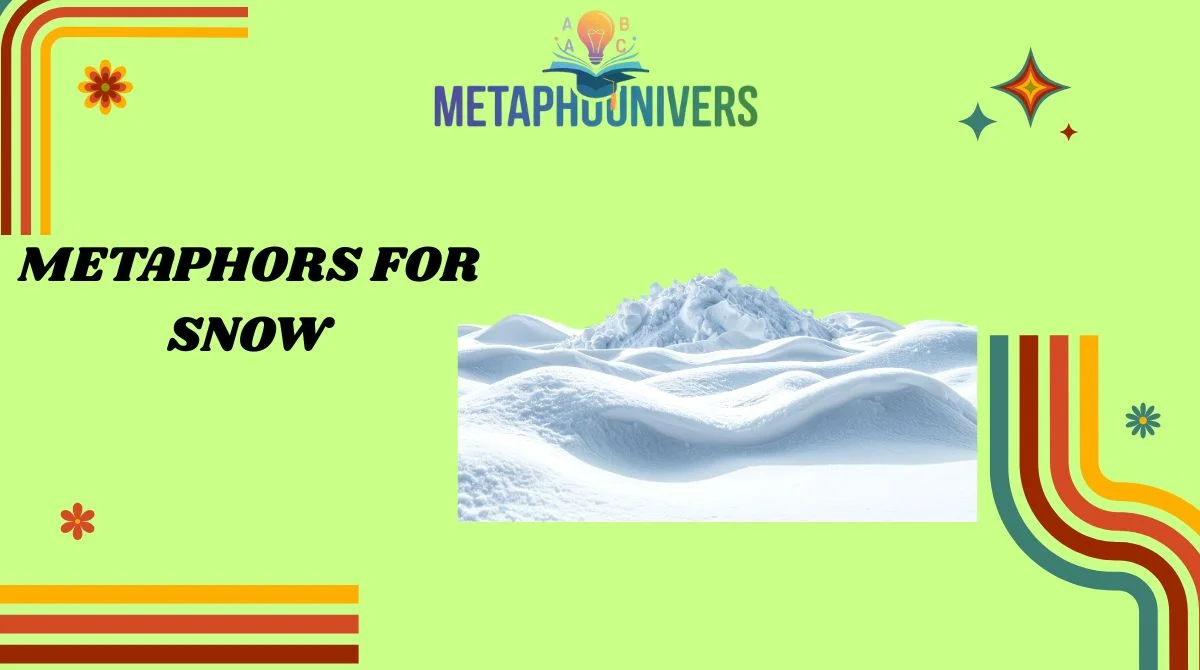
Snow as a White Quilt Over the Earth
Meaning & Interpretation: Suggests protection and gentle covering.
Best Used In: Descriptive essays, children’s literature, reflective prose.
Example Sentence: By dawn, the hills wore a white quilt, tucked in by the quiet hands of night.
Why It Works: Quilts imply warmth and care, creating contrast with winter’s severity.
Snow as a Sky of Falling Feathers
Meaning & Interpretation: Emphasizes softness and grace in motion.
Best Used In: Poetry and lyrical storytelling.
Example Sentence: The afternoon unraveled into a sky of falling feathers.
Why It Works: Feathers evoke lightness and calm descent.
Snow as Crushed Pearls Scattered by the Wind
Meaning & Interpretation: Suggests delicate luxury and scattered brilliance.
Best Used In: Romantic writing and vivid landscape description.
Example Sentence: The field glittered like crushed pearls scattered by the wind.
Why It Works: Pearls carry elegance and rarity, elevating visual imagery.
Snow as a Silent Tide
Meaning & Interpretation: Portrays snowfall as a gradual yet unstoppable force.
Best Used In: Dramatic fiction and environmental writing.
Example Sentence: The storm advanced like a silent tide, swallowing roads and rooftops.
Why It Works: Comparing snow to an ocean movement adds quiet power.
Emotional Metaphors
Snow as a Blank Page
Meaning & Interpretation: Represents new beginnings and possibility.
Best Used In: Personal essays and motivational speeches.
Example Sentence: The morning lay before her like a blank page of snow.
Why It Works: The connection to writing makes it deeply symbolic.
Snow as Forgotten Letters from the Sky
Meaning & Interpretation: Suggests nostalgia and unspoken messages.
Best Used In: Literary fiction and reflective poetry.
Example Sentence: Snow drifted down like forgotten letters from the sky.
Why It Works: Letters imply communication, memory, and longing.
Snow as a Veil Over Memory
Meaning & Interpretation: Symbolizes fading recollection or emotional suppression.
Best Used In: Psychological fiction.
Example Sentence: Time fell like snow, a veil over memory.
Why It Works: Veils imply concealment without complete erasure.
Snow as Whispered Apologies
Meaning & Interpretation: Conveys softness and reconciliation.
Best Used In: Emotional storytelling.
Example Sentence: The first flakes arrived like whispered apologies.
Why It Works: The comparison humanizes snowfall and softens its arrival.
Dark & Intense Metaphors
Snow as Ash from a Burned-Out Sky
Meaning & Interpretation: Suggests aftermath, loss, or destruction.
Best Used In: Dystopian fiction or tragic poetry.
Example Sentence: The storm fell like ash from a burned-out sky.
Why It Works: Ash carries connotations of endings and ruin.
Snow as a Shroud Over the World
Meaning & Interpretation: Represents death, stillness, or finality.
Best Used In: Gothic literature.
Example Sentence: By midnight, the town lay beneath a shroud of snow.
Why It Works: A shroud is associated with burial, intensifying tone.
Snow as Static Between Heaven and Earth
Meaning & Interpretation: Implies disconnection and interference.
Best Used In: Modern literary fiction.
Example Sentence: Snow blurred the city like static between heaven and earth.
Why It Works: Static suggests distortion and uncertainty.
Snow as Time Frozen Mid-Breath
Meaning & Interpretation: Conveys suspension and tension.
Best Used In: High-drama scenes.
Example Sentence: The valley stood as time frozen mid-breath.
Why It Works: Breath imagery connects to life itself.
Hopeful & Positive Metaphors
Snow as a Second Chance Falling from the Clouds
Meaning & Interpretation: Represents renewal and fresh starts.
Best Used In: Inspirational writing.
Example Sentence: Each flake felt like a second chance falling from the clouds.
Why It Works: Combines transformation with optimism.
Snow as a Crown on Winter’s Head
Meaning & Interpretation: Portrays snow as a symbol of majesty.
Best Used In: Fantasy writing.
Example Sentence: The mountains gleamed, crowned by winter’s white glory.
Why It Works: Crowns symbolize authority and grandeur.
Snow as Sugar Spilled by the Morning
Meaning & Interpretation: Suggests sweetness and delight.
Best Used In: Lighthearted stories.
Example Sentence: The yard shimmered like sugar spilled by the morning.
Why It Works: Sugar adds warmth and charm.
Snow as Light Given Shape
Meaning & Interpretation: Emphasizes radiance and purity.
Best Used In: Spiritual or reflective prose.
Example Sentence: The hillside looked like light given shape.
Why It Works: Abstract comparison deepens poetic resonance.
Snow as a Quiet Revolution
Meaning & Interpretation: Suggests subtle but complete transformation.
Best Used In: Symbolic storytelling.
Example Sentence: Overnight, a quiet revolution rewrote the streets in white.
Why It Works: Revolution implies dramatic change without noise.
How Writers Use These Metaphors
In novels, snow metaphors mirror character transformation or emotional distance.
In poetry, they heighten imagery and compress meaning into single striking comparisons.
In speeches, snow metaphors symbolize renewal, unity, or shared hardship.
In descriptive essays, they create immersive atmosphere and emotional tone.
Common Mistakes When Creating Metaphors
Cliché imagery: Avoid overused comparisons like “white as cotton.”
Mixed metaphors: Don’t combine unrelated images that confuse readers.
Overcomplication: If readers must decode the metaphor for minutes, it loses impact.
Repetition patterns: Vary structure and imagery to prevent monotony.
Practice Exercise
Fill in the Blanks
- Snow drifted across the road like _______.
- The rooftops wore snow like _______.
- The snowfall felt like _______ from the sky.
- The valley rested beneath a blanket of _______.
- Snow erased the city like _______.
- The storm moved like _______.
- Snow settled on her coat like _______.
- The field shimmered like _______.
- Snow covered the past like _______.
- The world became _______ under snow.
Create Your Own Metaphor
- Compare snow to an emotion.
- Compare snow to a sound.
- Compare snow to a historical event.
- Compare snow to a piece of clothing.
- Compare snow to a secret.
FAQs
Why is snow commonly used in metaphors?
Because it transforms landscapes quickly and carries symbolic meanings like renewal, silence, and concealment.
What emotions does snow usually represent in literature?
It can symbolize peace, loneliness, rebirth, emotional distance, or purity depending on context.
How can I avoid clichés when writing about snow?
Focus on unexpected comparisons rather than common winter imagery.
Are snow metaphors suitable for speeches?
Yes. They work especially well when discussing fresh starts, unity, or resilience.
Can snow symbolize both hope and darkness?
Absolutely. Its meaning depends on tone, setting, and narrative purpose.
Conclusion
Snow is more than weather—it is metaphorical terrain waiting to be explored. Whether you use it to express transformation, concealment, grief, or renewal, the key is originality.
Think beyond surface description. Ask what snow means in your scene, then build imagery from that emotional core.
When used thoughtfully, snow metaphors don’t just decorate writing—they redefine it.

I am David Cooper, an English language enthusiast and content creator at Metaphounivers, dedicated to simplifying grammar and vocabulary for learners worldwide. I help students build confidence and improve their communication skills through clear, practical lessons.