A metaphor is more than a decorative phrase — it is a bridge between the visible world and invisible emotion.
When we say “time is a river” or “grief is a shadow,” we aren’t being literal. We are translating feeling into image. That translation is where writing becomes unforgettable.
Metaphors for peace carry extraordinary power because peace itself is abstract. It cannot be touched, yet it can transform a room. It cannot be seen, yet it alters posture, breathing, and thought.
Through metaphor, writers give peace texture, sound, temperature, and movement.
Emotionally, peace often represents relief, restoration, safety, forgiveness, or closure. Symbolically, it can signal rebirth after conflict, maturity after chaos, or wisdom after struggle.
When crafted thoughtfully, metaphors for peace do more than beautify language — they allow readers to experience calm rather than merely understand it.
In this guide, you’ll discover deeply original metaphors, their layered meanings, and how to use them effectively in modern creative writing.
Understanding the Symbolism of Peace
Emotional Meaning
Peace is frequently associated with release — the exhale after holding breath too long. It reflects internal alignment, acceptance, and emotional equilibrium. For some, peace is quiet joy; for others, it is the absence of turmoil.
Psychological Associations
Psychologically, peace suggests safety. The human nervous system responds to stability with slower heart rate and clearer thinking. In literature, this often appears through imagery of stillness, open landscapes, or softened light.
Cultural Symbolism
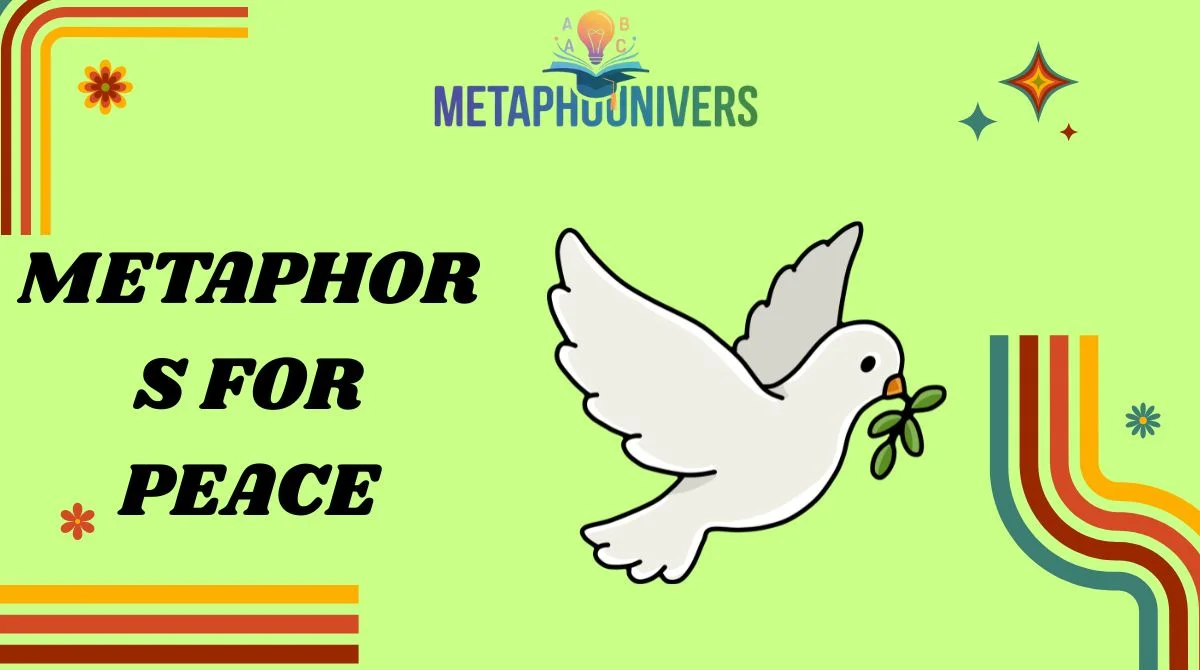
Across cultures, peace is symbolized by doves, olive branches, calm water, white garments, or dawn. Yet modern writing pushes beyond traditional icons to explore peace as resilience, silence, or sacred space.
Literary Usage
Authors use peace to contrast tension. After a climactic conflict, a peaceful scene acts as emotional resolution. In poetry, peace may serve as a spiritual destination. In speeches, it becomes a moral aspiration.
Nature-Based Metaphors
Peace Is a Lake Without Ripples
Meaning & Interpretation: A state untouched by disturbance; emotional steadiness.
Best Used In: Reflective essays, meditative poetry.
Example Sentence: After years of resentment, her heart became a lake without ripples.
Why It Works: Still water instantly conveys stability and clarity.
Peace Is the First Light After a Long Storm
Meaning & Interpretation: Renewal following hardship.
Best Used In: Personal narratives, healing journeys.
Example Sentence: When forgiveness arrived, it felt like the first light after a long storm.
Why It Works: The contrast between storm and light heightens emotional relief.
Peace Is a Forest That Breathes Slowly
Meaning & Interpretation: Deep, grounding calm.
Best Used In: Descriptive fiction.
Example Sentence: The monastery rested like a forest that breathes slowly.
Why It Works: Forest imagery evokes rhythm, life, and gentle continuity.
Peace Is Winter Sun on Bare Skin
Meaning & Interpretation: Subtle warmth during vulnerability.
Best Used In: Literary prose.
Example Sentence: His apology was winter sun on bare skin.
Why It Works: Combines fragility and comfort without exaggeration.
Peace Is a Horizon Without Smoke
Meaning & Interpretation: Freedom from conflict.
Best Used In: Political speeches, essays.
Example Sentence: They dreamed of a horizon without smoke.
Why It Works: Smoke implies destruction; its absence implies hope.
Emotional Metaphors
Peace Is an Untied Knot in the Chest
Meaning & Interpretation: Release from anxiety.
Best Used In: Memoirs, therapeutic writing.
Example Sentence: The diagnosis brought answers, and with it, an untied knot in her chest.
Why It Works: Physical sensation makes emotional shift tangible.
Peace Is a Room With No Locked Doors
Meaning & Interpretation: Safety and openness.
Best Used In: Symbolic storytelling.
Example Sentence: In his presence, conversation felt like a room with no locked doors.
Why It Works: Suggests trust without explicitly naming it.
Peace Is a Slow, Steady Pulse
Meaning & Interpretation: Emotional balance.
Best Used In: Character development scenes.
Example Sentence: Acceptance returned her thoughts to a slow, steady pulse.
Why It Works: Biological rhythm mirrors psychological harmony.
Peace Is the Silence That Listens Back
Meaning & Interpretation: Mutual understanding.
Best Used In: Spiritual writing.
Example Sentence: In meditation, she found the silence that listens back.
Why It Works: Personifies silence, deepening intimacy.
Dark or Intense Metaphors
Peace Is a Battlefield Gone Quiet
Meaning & Interpretation: Calm after devastation.
Best Used In: War narratives.
Example Sentence: The ceasefire turned the city into a battlefield gone quiet.
Why It Works: The stark contrast amplifies emotional weight.
Peace Is Ash Settling After Fire
Meaning & Interpretation: Aftermath and fragile calm.
Best Used In: Dramatic fiction.
Example Sentence: Their argument ended in ash settling after fire.
Why It Works: Evokes consequence, not just tranquility.
Peace Is a Scar That No Longer Hurts
Meaning & Interpretation: Healed pain.
Best Used In: Personal essays.
Example Sentence: Time transformed the betrayal into a scar that no longer hurts.
Why It Works: Acknowledges past suffering while signaling recovery.
Peace Is the Last Echo Fading
Meaning & Interpretation: Closure.
Best Used In: Endings in novels.
Example Sentence: When she moved on, it was the last echo fading.
Why It Works: Sound imagery suggests gradual resolution.
Hopeful and Positive Metaphors
Peace Is an Open Window at Dawn
Meaning & Interpretation: Fresh beginnings.
Best Used In: Inspirational writing.
Example Sentence: Graduation felt like an open window at dawn.
Why It Works: Combines light, air, and possibility.
Peace Is a Garden That Grows Without Guarding
Meaning & Interpretation: Trust and sustainability.
Best Used In: Speeches on unity.
Example Sentence: Community is a garden that grows without guarding.
Why It Works: Suggests harmony through cooperation.
Peace Is a Compass That Finally Points Home
Meaning & Interpretation: Inner alignment.
Best Used In: Coming-of-age stories.
Example Sentence: After years of wandering, she found a compass that finally points home.
Why It Works: Navigation imagery reflects emotional direction.
Peace Is a Shared Breath Between Strangers
Meaning & Interpretation: Collective understanding.
Best Used In: Social commentary.
Example Sentence: The vigil created a shared breath between strangers.
Why It Works: Breath is universal and humanizing.
Peace Is an Anchor in Moving Water
Meaning & Interpretation: Stability amid change.
Best Used In: Motivational essays.
Example Sentence: Faith became an anchor in moving water.
Why It Works: Combines motion and steadiness.
How Writers Use These Metaphors
In Novels
Peace often follows tension. After conflict, authors slow pacing and introduce softer imagery to signal emotional resolution.
In Poetry
Poets condense peace into symbolic lines, allowing readers to interpret layered meaning.
In Speeches
Leaders use metaphors to transform political goals into relatable images.
In Descriptive Essays
Writers ground abstract calm in sensory detail to help readers feel the atmosphere.
Common Mistakes When Creating Metaphors
Cliché Imagery
Overused symbols like doves or rainbows may weaken originality.
Mixed Metaphors
Avoid combining incompatible images, such as “a river of silence burning brightly.”
Overcomplication
If readers must decode excessively, emotional impact is lost.
Repetition Patterns
Using the same structural rhythm repeatedly makes writing predictable.
Practice Exercise
Fill in the Blanks
- Peace is a ______ after the sirens fade.
- Her forgiveness felt like ______ in early spring.
- The village rested like ______ beneath the hills.
- Acceptance arrived as ______ in the mind.
- Peace became ______ after years of noise.
- His words were ______ across troubled waters.
- The treaty offered ______ to the nation.
- She carried peace like ______ in her pocket.
- The apology settled like ______ at dusk.
- Trust grew into ______ between them.
Create Your Own Metaphor
- Compare peace to a natural element.
- Compare peace to a physical object.
- Create a metaphor for peace after heartbreak.
- Write a metaphor linking peace and sound.
- Craft one dark but hopeful metaphor for peace.
FAQs
What makes a metaphor for peace powerful?
Specific imagery paired with emotional relevance creates impact.
How can I avoid cliché metaphors?
Look beyond common symbols and focus on personal sensory experience.
Can peace metaphors be intense instead of gentle?
Yes. Peace after chaos can be portrayed through contrast.
Are metaphors better than similes in poetry?
Metaphors often feel stronger because they assert identity rather than comparison.
How do I know if my metaphor works?
If readers can visualize and emotionally connect without confusion, it works.
Conclusion
Peace may be invisible, but through metaphor, it becomes something readers can touch, hear, and carry.
Whether you depict it as a steady pulse, a cleared horizon, or an anchor in moving water, your task as a writer is to make calm experiential.
Let imagery do what definitions cannot. Allow peace to breathe on the page — and your readers will breathe with it.

I am David Cooper, an English language enthusiast and content creator at Metaphounivers, dedicated to simplifying grammar and vocabulary for learners worldwide. I help students build confidence and improve their communication skills through clear, practical lessons.