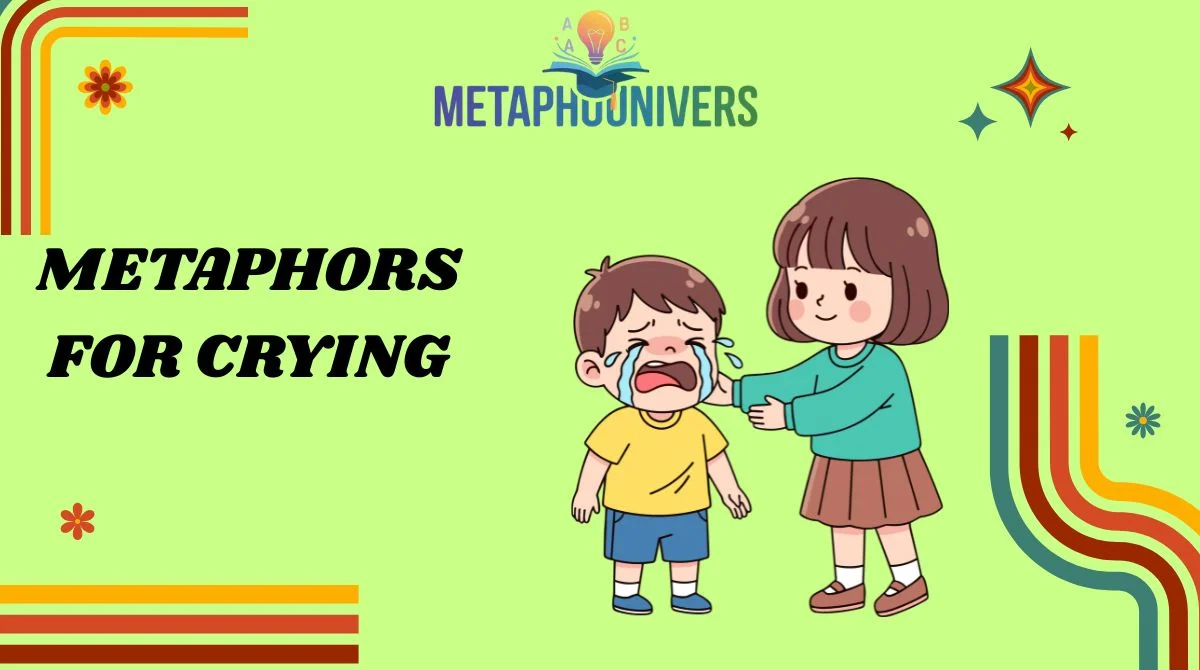
Metaphors are the secret language of the soul, turning ordinary words into vivid, resonant imagery. When it comes to crying, metaphors allow writers to convey emotion in a way raw descriptions often cannot.
A simple “she cried” is flat, but a metaphor like “her tears were silent rivers” transforms the act into something tangible, poetic, and deeply symbolic.
Crying metaphors do more than describe—they reveal the intensity of human emotion, hint at inner turmoil, and connect readers to universal experiences of grief, joy, or release.
By using metaphors creatively, writers can capture the invisible weight of sadness, the fleeting sparkle of hope, or the stormy chaos of despair.
In literature, speeches, poetry, and storytelling, these metaphors make emotions linger, echoing in readers’ minds long after the page is closed.
This guide unveils over 15 original metaphors for crying, exploring their meaning, cultural resonance, and literary power.
Understanding the Symbolism of Crying
Crying is far more than a physical act—it is a mirror of the human psyche. Emotionally, it represents vulnerability, catharsis, and authenticity. Psychologically, tears can signify stress release, emotional healing, or subconscious expression of pain. Across cultures, crying carries layered meanings: in some societies, it is a mark of strength in expressing grief; in others, a private gesture of weakness. Literature often elevates crying from a mere action to a symbol of transformation, intimacy, or even rebellion. When a character weeps, writers can communicate despair, longing, or redemption without ever stating the obvious. By exploring crying through metaphor, authors give words to the unspoken and paint the invisible landscape of the human heart.
Nature-Based Metaphors
Tears as Rain
Meaning & Interpretation: Tears falling like rain symbolize cleansing, renewal, and natural cycles of grief.
Best Used In: Poetry, storytelling
Example Sentence: Her tears fell like spring rain, softening the hardened soil of her heart.
Why It Works: It links human emotion to a universal natural rhythm, evoking both gentleness and inevitability.
Tears as Melting Snow
Meaning & Interpretation: Tears as snow signify quiet sorrow and subtle emotional thawing.
Best Used In: Descriptive essays, poetry
Example Sentence: He watched her tears melt like morning snow on cold pavement.
Why It Works: The imagery conveys delicate impermanence, blending emotion with fleeting nature.
Tears as Ocean Waves
Meaning & Interpretation: Suggests overwhelming emotion and cyclical intensity.
Best Used In: Novels, speeches
Example Sentence: Her tears crashed over her like relentless ocean waves.
Why It Works: Instills a sense of unstoppable force and emotional depth.
Emotional Metaphors
Tears as Buried Gems
Meaning & Interpretation: Hidden emotions that hold value and complexity.
Best Used In: Poetry, reflective essays
Example Sentence: Each tear was a buried gem, precious and heavy with memories.
Why It Works: Emphasizes emotional worth and hidden depth, transforming sorrow into something tangible.
Tears as Silent Letters
Meaning & Interpretation: Tears communicate what words cannot.
Best Used In: Storytelling, letters, diaries
Example Sentence: Her tears wrote silent letters to the universe.
Why It Works: Merges communication and emotion, portraying the ineffable.
Tears as Broken Chords
Meaning & Interpretation: Emotional resonance disrupted, like a musical instrument in pain.
Best Used In: Poetry, dramatic prose
Example Sentence: His tears fell like broken chords on a silent piano.
Why It Works: Evokes auditory imagery alongside visual, enhancing multisensory experience.
Dark/Intense Metaphors
Tears as Poisoned Rain
Meaning & Interpretation: Painful, corrosive sorrow that leaves lingering scars.
Best Used In: Gothic literature, dramatic storytelling
Example Sentence: She wept poisoned rain, each drop burning with regret.
Why It Works: Conveys danger and intensity, heightening the emotional stakes.
Tears as Molten Lava
Meaning & Interpretation: Explosive emotion, destructive yet cathartic.
Best Used In: Novels, speeches
Example Sentence: His grief flowed like molten lava, unstoppable and scorching.
Why It Works: Blends natural force with emotional devastation, producing vivid intensity.
Tears as Midnight Shadows
Meaning & Interpretation: Hidden, quiet sorrow lurking in darkness.
Best Used In: Poetry, introspective essays
Example Sentence: Tears pooled in her eyes like midnight shadows.
Why It Works: Suggests secrecy, intimacy, and emotional depth.
Hopeful/Positive Metaphors
Tears as Sparkling Dew
Meaning & Interpretation: Gentle sorrow that refreshes and inspires growth.
Best Used In: Poetry, uplifting narratives
Example Sentence: Her tears glimmered like morning dew, tender and renewing.
Why It Works: Creates a sense of gentle hope and cleansing beauty.
Tears as Sunlight Streams
Meaning & Interpretation: Tears leading to clarity, emotional enlightenment.
Best Used In: Speeches, reflective essays
Example Sentence: Through her tears, sunlight streamed into her heart.
Why It Works: Balances sadness with optimism, offering emotional resolution.
Tears as Blossoming Petals
Meaning & Interpretation: Sorrow as a prelude to growth and beauty.
Best Used In: Poetry, novels
Example Sentence: Each tear was a petal unfolding in the garden of her soul.
Why It Works: Links pain to transformation, making grief constructive and poetic.
Poetic & Romantic Metaphors
Tears as Silver Threads
Meaning & Interpretation: Emotional connection that shines even in sorrow.
Best Used In: Romantic poetry, lyrical essays
Example Sentence: His tears wove silver threads between their hearts.
Why It Works: Highlights intimacy and the luminous beauty of shared emotion.
Tears as Moonlight Mirrors
Meaning & Interpretation: Reflects inner feelings softly and poetically.
Best Used In: Love poetry, dreamy narratives
Example Sentence: Her tears were moonlight mirrors, reflecting memories of lost love.
Why It Works: Evokes ethereal imagery, blending reflection and emotion.
Dramatic & Powerful Metaphors
Tears as Falling Stars
Meaning & Interpretation: Rare, intense sorrow with a fleeting, almost magical quality.
Best Used In: Speeches, dramatic fiction
Example Sentence: Tears streaked down his face like falling stars in a night sky.
Why It Works: Combines grandeur with emotion, creating unforgettable visual impact.
Tears as Shattered Glass
Meaning & Interpretation: Pain that fractures the soul, raw and dangerous.
Best Used In: Intense novels, poetry
Example Sentence: Her grief spilled like shattered glass across the floor of her heart.
Why It Works: Conveys fragility, danger, and emotional sharpness simultaneously.
Tears as Lightning Bolts
Meaning & Interpretation: Sudden, electrifying emotional release.
Best Used In: Speeches, high-drama storytelling
Example Sentence: His tears struck like lightning bolts, illuminating years of buried pain.
Why It Works: Suggests suddenness, energy, and undeniable impact.
How Writers Use These Metaphors
In novels, metaphors give characters emotional dimension.
In poetry, they provide rhythm, beauty, and resonance.
In speeches, they evoke empathy and connection.
In essays, they illustrate ideas in memorable, symbolic ways.
Common Mistakes When Creating Metaphors
- Cliché Imagery: Avoid tired phrases like “flood of tears.”
- Mixed Metaphors: Ensure consistent imagery.
- Overcomplication: Keep metaphors clear and relatable.
- Repetition Patterns: Vary emotional and visual language to maintain impact.
Practice Exercise
Fill in the blanks:
- Her tears fell like _________.
- He wept, and the sky seemed to _________.
- Tears streamed down her face like _________.
- Each tear was a _________ in the garden of her soul.
- His grief struck like _________.
- She cried silently, tears like _________.
- Tears spilled, resembling _________.
- His sorrow was molten, flowing like _________.
- She wept, her eyes reflecting _________.
- Tears gathered like _________ in the twilight.
Create Your Own Metaphor:
- Describe tears as a natural element.
- Turn crying into a musical experience.
- Portray tears as a form of communication.
- Use light or shadow imagery for tears.
- Express a joyful cry metaphorically.
FAQs
What is a metaphor for crying?
A metaphor for crying describes tears in imaginative ways, linking emotion to tangible images or experiences.
Why use metaphors instead of literal descriptions?
Metaphors convey depth, emotion, and resonance that simple descriptions often cannot capture.
How can I create original crying metaphors?
Focus on emotions, nature, sensory experiences, and cultural symbols for inspiration.
Can crying metaphors be used in speeches?
Absolutely—powerful metaphors evoke empathy and connect audiences to shared experiences.
Are there cultural differences in crying metaphors?
Yes, some cultures associate tears with strength, purification, or mourning, influencing metaphorical expression.
Conclusion
Metaphors for crying are keys to unlocking emotion, allowing writers to transform simple tears into universal symbols of human experience.
Experimenting with imagery—nature, music, light, and shadow—enriches storytelling, poetry, and prose.
By weaving these metaphors thoughtfully, writers can make sorrow, joy, and catharsis not just visible but unforgettable. Let each tear in your writing shine with metaphorical brilliance.

I am David Cooper, an English language enthusiast and content creator at Metaphounivers, dedicated to simplifying grammar and vocabulary for learners worldwide. I help students build confidence and improve their communication skills through clear, practical lessons.