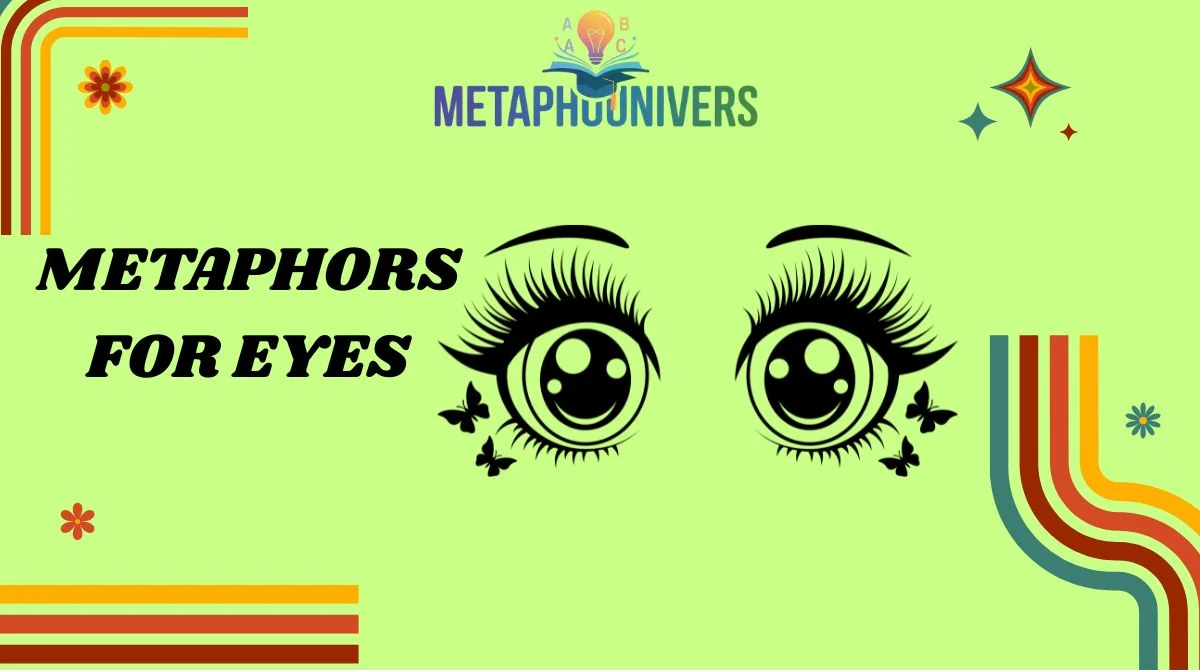
The eyes are often called the windows to the soul, but metaphors allow writers to transform these windows into portals of imagination.
A metaphor is a figure of speech in which one thing is described as if it were another, creating layers of meaning that resonate emotionally and intellectually.
When applied to eyes, metaphors unlock the invisible landscapes of thought, feeling, and perception, making the intangible tangible.
They allow a writer to convey emotion, character depth, and mood with poetic precision, making descriptions linger in readers’ minds long after the page is closed.
Metaphors about eyes are particularly powerful because eyes themselves are deeply symbolic: they reflect truth, conceal secrets, and reveal vulnerability.
Through metaphorical language, a glance can become a storm, a spark, or a mirror to the heart.
In literature, poetry, and storytelling, such imagery elevates writing from mere observation to a tapestry of emotion, connecting readers directly to the inner life of characters.
Understanding the Symbolism of Eyes
Eyes carry profound emotional and cultural weight. Psychologically, they are associated with perception, awareness, and intuition. Emotionally, eyes can convey sorrow, joy, fear, or desire without a single word. Across cultures, eyes symbolize wisdom, protection, and the human spirit. In literature, they often become focal points of narrative tension—heroes whose eyes shine with courage, villains whose gaze chills the soul. Understanding this symbolic power allows writers to craft metaphors that are vivid, meaningful, and universally resonant.
Nature-Based Metaphors
Eyes like a Sunset
Meaning & Interpretation: Expresses warmth, depth, and fleeting beauty.
Best Used In: Poetry, romantic storytelling
Example Sentence: Her eyes were like a sunset, glowing with the soft surrender of evening.
Why It Works: Combines visual beauty with temporal poignancy, evoking both sight and feeling.
Eyes like Rivers
Meaning & Interpretation: Suggests depth, constant movement, and hidden currents of emotion.
Best Used In: Novels, reflective essays
Example Sentence: His eyes were rivers, carrying untold stories under their calm surface.
Why It Works: Evokes the fluid, ever-changing nature of emotion.
Eyes like Morning Dew
Meaning & Interpretation: Innocent, fresh, and delicate perception.
Best Used In: Poetry, descriptive essays
Example Sentence: Her eyes were morning dew, catching the first light of hope.
Why It Works: Creates a gentle, visual metaphor tied to renewal and fragility.
Emotional Metaphors
Eyes like Open Books
Meaning & Interpretation: Transparent, honest, revealing character or feelings.
Best Used In: Fiction, character sketches
Example Sentence: He wore his heart openly; his eyes were like open books.
Why It Works: Connects the universal idea of reading with human emotional clarity.
Eyes like Melancholy Stars
Meaning & Interpretation: Reflect sadness yet shine faintly with beauty.
Best Used In: Poetry, introspective storytelling
Example Sentence: Her eyes were melancholy stars, distant yet luminous.
Why It Works: Juxtaposes sorrow with wonder, creating emotional tension.
Eyes like Flame
Meaning & Interpretation: Passionate, intense, alive with emotion.
Best Used In: Dramatic storytelling, speeches
Example Sentence: His eyes were flame, igniting every room he entered.
Why It Works: Transfers the energy of fire to human emotion, vivid and memorable.
Dark/Intense Metaphors
Eyes like Abysses
Meaning & Interpretation: Dark, mysterious, or unfathomable.
Best Used In: Thrillers, gothic literature
Example Sentence: Her gaze was an abyss, pulling him into shadows he feared.
Why It Works: Suggests danger and depth, evoking curiosity and caution.
Eyes like Midnight
Meaning & Interpretation: Secretive, quiet, and enigmatic.
Best Used In: Poetry, suspense stories
Example Sentence: His eyes were midnight, revealing nothing but hinting at everything.
Why It Works: Uses time imagery to enhance darkness and mystery.
Eyes like Broken Glass
Meaning & Interpretation: Fragile, painful, reflecting inner turmoil.
Best Used In: Tragic storytelling, character-driven essays
Example Sentence: Her eyes were broken glass, shimmering with fractured memories.
Why It Works: Combines visual and emotional intensity, instantly evocative.
Hopeful/Positive Metaphors
Eyes like Sunlight
Meaning & Interpretation: Warm, cheerful, illuminating presence.
Best Used In: Inspirational essays, feel-good stories
Example Sentence: His eyes were sunlight, chasing away the clouds of doubt.
Why It Works: Connects visual brightness with emotional warmth.
Eyes like Spring
Meaning & Interpretation: Fresh, renewing, full of life and promise.
Best Used In: Poetry, motivational writing
Example Sentence: Her eyes were spring, blooming with laughter and hope.
Why It Works: Infuses life and energy into a metaphor for perception.
Eyes like Lanterns
Meaning & Interpretation: Guiding, protective, or illuminating understanding.
Best Used In: Speeches, reflective essays
Example Sentence: His eyes were lanterns, lighting the path through despair.
Why It Works: Suggests leadership and insight, creating emotional resonance.
Poetic & Romantic Metaphors
Eyes like Oceans
Meaning & Interpretation: Vast, deep, capable of holding endless emotion.
Best Used In: Love poetry, romantic novels
Example Sentence: I drowned willingly in her ocean eyes, lost and found at once.
Why It Works: Evokes depth, emotion, and immersion, enhancing romantic imagery.
Eyes like Poetry
Meaning & Interpretation: Expressive, beautiful, capable of conveying subtle meaning.
Best Used In: Romantic essays, lyrical storytelling
Example Sentence: His eyes were poetry, each glance a line of silent verse.
Why It Works: Abstract but relatable, marrying emotion with artistry.
Eyes like Jewels
Meaning & Interpretation: Precious, captivating, and mesmerizing.
Best Used In: Romantic fiction, descriptive essays
Example Sentence: Her eyes were jewels, sparkling with mischief and charm.
Why It Works: Suggests value, allure, and visual brilliance.
Dramatic & Powerful Metaphors
Eyes like Thunder
Meaning & Interpretation: Forceful, commanding, filled with raw energy.
Best Used In: Speeches, epic storytelling
Example Sentence: His eyes were thunder, silencing every doubt in the room.
Why It Works: Transforms natural power into human intensity, immediate impact.
Eyes like Fireworks
Meaning & Interpretation: Explosive, dazzling, capturing attention instantly.
Best Used In: Dramatic novels, poetry
Example Sentence: Her eyes were fireworks, igniting excitement in every glance.
Why It Works: Conveys motion, surprise, and visual spectacle.
Eyes like Mirrors
Meaning & Interpretation: Reflective, revealing truth about the observer.
Best Used In: Psychological essays, introspective fiction
Example Sentence: Their eyes were mirrors, showing me who I truly was.
Why It Works: Makes the gaze interactive, emotionally engaging, and thought-provoking.
How Writers Use These Metaphors
- In novels: To reveal character depth or foreshadow events.
- In poetry: To evoke emotion and create vivid sensory experiences.
- In speeches: To connect with audiences emotionally through imagery.
- In descriptive essays: To add nuance and elegance to narrative observations.
Common Mistakes When Creating Metaphors
- Using cliché imagery (e.g., “eyes like diamonds” overused)
- Mixing unrelated metaphors, causing confusion
- Overcomplicating metaphors, losing clarity
- Repetition of adjective patterns, dulling impact
Practice Exercise
Fill in the blanks:
- Her eyes were like ___________, carrying a quiet storm.
- His eyes, ___________, could ignite hope in anyone.
- The child’s eyes were ___________, reflecting pure innocence.
- Her gaze, ___________, pierced through the darkness.
- His eyes were ___________, revealing hidden sorrow.
- The lover’s eyes were ___________, full of gentle fire.
- Her eyes, ___________, shimmered with unspoken secrets.
- The hero’s eyes were ___________, leading the lost.
- His eyes, ___________, mirrored the soul’s depths.
- Her gaze was ___________, a fleeting glimpse of heaven.
Create your own metaphor:
- Describe eyes as a weather phenomenon.
- Compare eyes to a type of light.
- Make a metaphor connecting eyes to an animal.
- Create a metaphor using a celestial object.
- Describe eyes as an emotional landscape.
People Also Ask
What are some unique metaphors for eyes?
Eyes can be compared to rivers, stars, mirrors, oceans, flames, and more—each capturing a different emotion or quality.
How do eye metaphors enhance storytelling?
They convey character depth, reveal emotion subtly, and create vivid, memorable imagery that engages readers.
Can eye metaphors be used in speeches?
Absolutely. Eye metaphors can connect emotionally with audiences, making abstract concepts tangible.
What is the symbolism of eyes in literature?
Eyes symbolize perception, truth, emotion, and sometimes mystery, serving as a window into a character’s inner world.
How can I create original metaphors for eyes?
Observe nature, emotions, and human behavior. Link sensory experiences or cultural symbols to eyes in unexpected ways.
Conclusion
Metaphors for eyes unlock layers of emotion, beauty, and meaning that simple descriptions cannot reach.
By using creative, culturally aware, and emotionally resonant imagery, writers can make every glance a story, every gaze a universe.
Experiment with metaphor, challenge clichés, and let your words illuminate the soul through the windows of perception.

I am David Cooper, an English language enthusiast and content creator at Metaphounivers, dedicated to simplifying grammar and vocabulary for learners worldwide. I help students build confidence and improve their communication skills through clear, practical lessons.