Metaphors are the quiet architects of meaning. They allow us to understand the abstract through the familiar, turning invisible ideas into vivid experiences.
Instead of defining something directly, a metaphor becomes it—bridging thought and feeling in a way literal language cannot.
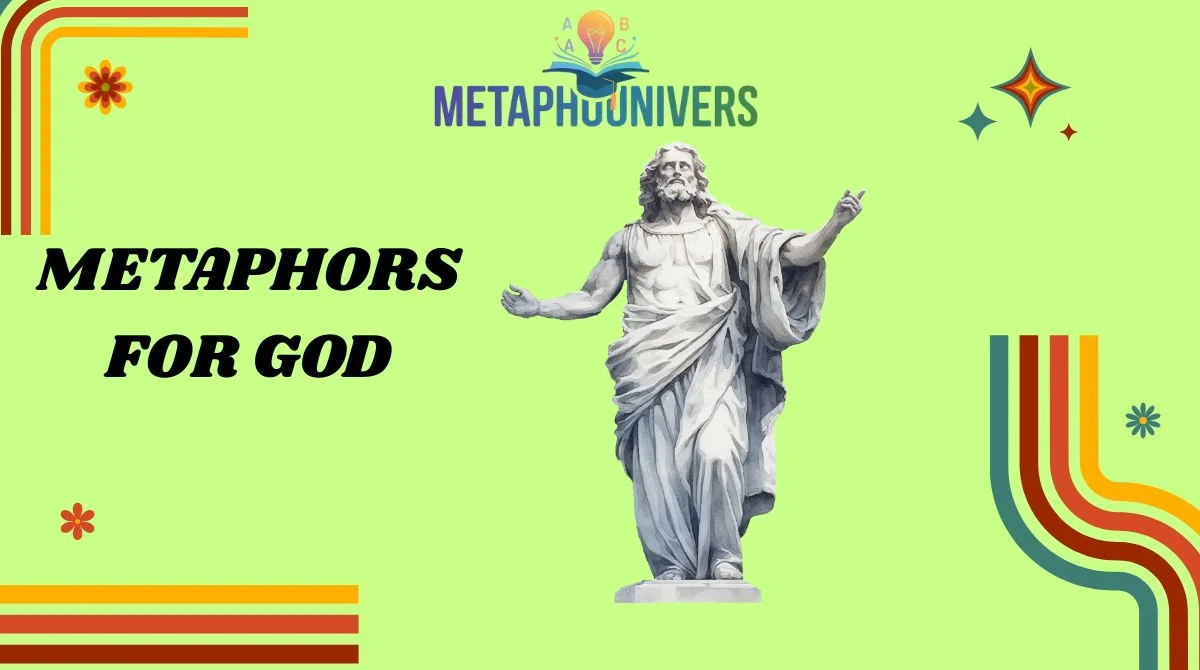
When writing about God, metaphors become especially powerful. The concept of God often stretches beyond language, beyond logic, and even beyond imagination.
This is where metaphor steps in—not to define, but to evoke. Through metaphor, God can be felt as light, heard as silence, or understood as a force shaping existence.
These symbolic expressions carry emotional weight. They reflect awe, fear, love, mystery, and longing. Across cultures and literature, metaphors for God have shaped sacred texts, poetry, and philosophical works, giving voice to what cannot be fully spoken.
For writers, they are tools not just of description, but of connection—linking human experience with the infinite.
Understanding the Symbolism of God
Metaphors for God carry layers of meaning that extend far beyond simple comparison.
Emotional Meaning
They often express comfort, guidance, protection, or even overwhelming power. For some, God is a source of peace; for others, a force that inspires awe or fear. The metaphor chosen reflects the writer’s emotional relationship with the divine.
Psychological Associations
Metaphors help the mind grasp something intangible. By framing God as a parent, light, or architect, writers anchor the unknown in familiar mental patterns, making abstract ideas easier to process.
Cultural Symbolism
Different cultures shape different metaphors. In some traditions, God is seen as a shepherd; in others, as fire, wind, or an ocean. These reflect values, environment, and belief systems unique to each society.
Literary Usage
Writers use metaphors for God to deepen themes, build atmosphere, and evoke introspection. Whether subtle or dramatic, these metaphors can transform ordinary sentences into profound reflections.
20 Unique Metaphors for God
Nature-Based Metaphors
God is the Endless Ocean
Meaning & Interpretation
Represents depth, mystery, and boundless existence.
Best Used In
Poetry, spiritual essays
Example Sentence
Her faith drifted like a boat upon God, the endless ocean beneath her fears.
Why It Works
The ocean’s vastness mirrors the incomprehensible nature of the divine.
God is the Silent Mountain
Meaning & Interpretation
Symbolizes strength, stability, and timeless presence.
Best Used In
Reflective writing, storytelling
Example Sentence
He leaned on God, the silent mountain that never moved.
Why It Works
Mountains evoke endurance and quiet authority.
God is the Rising Sun
Meaning & Interpretation
Embodies renewal, hope, and illumination.
Best Used In
Speeches, inspirational writing
Example Sentence
After despair, God rose in her life like a patient sun.
Why It Works
Sunrise imagery naturally conveys rebirth and clarity.
God is the Whispering Wind
Meaning & Interpretation
Suggests subtle guidance and unseen influence.
Best Used In
Poetry, philosophical prose
Example Sentence
In stillness, he felt God as a whispering wind across his thoughts.
Why It Works
Wind is invisible yet powerful—like divine presence.
Emotional Metaphors
God is a Gentle Embrace
Meaning & Interpretation
Reflects comfort, safety, and unconditional care.
Best Used In
Personal essays, spiritual reflections
Example Sentence
In grief, she found God as a gentle embrace around her broken heart.
Why It Works
Physical warmth translates emotional security.
God is a Burning Longing
Meaning & Interpretation
Represents desire for connection with the divine.
Best Used In
Poetry, romantic spiritual writing
Example Sentence
His soul carried God like a burning longing he could never extinguish.
Why It Works
Intensity creates emotional depth and urgency.
God is a Quiet Tear
Meaning & Interpretation
Symbolizes empathy and shared sorrow.
Best Used In
Literary prose
Example Sentence
God moved through her pain like a quiet tear she didn’t notice falling.
Why It Works
Subtle imagery makes the metaphor intimate and personal.
Dark & Intense Metaphors
God is a Thunderclap
Meaning & Interpretation
Represents power, judgment, and sudden realization.
Best Used In
Dramatic writing, sermons
Example Sentence
The truth struck him like God, a thunderclap splitting his certainty.
Why It Works
Sharp, explosive imagery captures overwhelming force.
God is a Consuming Fire
Meaning & Interpretation
Symbolizes purification, destruction, and transformation.
Best Used In
Religious or epic writing
Example Sentence
She feared God as a consuming fire that left nothing unchanged.
Why It Works
Fire conveys both danger and renewal.
God is the Abyss
Meaning & Interpretation
Reflects mystery, depth, and the unknown.
Best Used In
Philosophical writing
Example Sentence
He stared into God, the abyss that stared back with silence.
Why It Works
Creates tension between curiosity and fear.
Hopeful & Positive Metaphors
God is a Guiding Star
Meaning & Interpretation
Represents direction and purpose.
Best Used In
Motivational writing
Example Sentence
In chaos, God became her guiding star through uncertainty.
Why It Works
Stars symbolize navigation and hope.
God is a Living Light
Meaning & Interpretation
Symbolizes truth, clarity, and presence.
Best Used In
Poetry, essays
Example Sentence
God filled the room like a living light no shadow could resist.
Why It Works
Light naturally opposes darkness, creating strong contrast.
God is an Open Door
Meaning & Interpretation
Represents opportunity and grace.
Best Used In
Speeches, storytelling
Example Sentence
When all paths closed, God stood as an open door before him.
Why It Works
Doors evoke transition and possibility.
Poetic & Romantic Metaphors
God is a Love That Breathes
Meaning & Interpretation
Expresses intimacy and constant presence.
Best Used In
Poetry
Example Sentence
She felt God as a love that breathes within every heartbeat.
Why It Works
Blends physical life with emotional connection.
God is a Song Without End
Meaning & Interpretation
Represents eternal harmony.
Best Used In
Creative writing
Example Sentence
The universe echoed God, a song without end.
Why It Works
Music imagery adds rhythm and continuity.
God is Ink on the Soul
Meaning & Interpretation
Symbolizes permanence and identity.
Best Used In
Literary essays
Example Sentence
Faith marked him as God, ink on the soul that never fades.
Why It Works
Writing imagery connects meaning with identity.
Dramatic & Powerful Metaphors
God is the Architect of Time
Meaning & Interpretation
Represents creation and control over existence.
Best Used In
Epic storytelling
Example Sentence
They believed God, the architect of time, shaped every moment.
Why It Works
Adds grandeur and authority.
God is the Pulse of the Universe
Meaning & Interpretation
Symbolizes life force and continuity.
Best Used In
Philosophical writing
Example Sentence
He sensed God as the pulse of the universe beneath all things.
Why It Works
Creates a rhythmic, living image.
God is an Unwritten Story
Meaning & Interpretation
Represents mystery and unfolding purpose.
Best Used In
Reflective essays
Example Sentence
Life revealed God as an unwritten story still becoming.
Why It Works
Invites curiosity and imagination.
How Writers Use These Metaphors
In novels, metaphors for God help shape characters’ beliefs and internal conflicts. A character who sees God as fire will act differently than one who sees God as light.
In poetry, these metaphors compress vast ideas into a few lines, allowing emotion and meaning to blend seamlessly.
In speeches, they inspire and persuade, turning abstract spirituality into relatable imagery.
In descriptive essays, they enrich tone and depth, making philosophical ideas more engaging and vivid.
Common Mistakes When Creating Metaphors
Cliché Imagery
Overused comparisons weaken originality. Fresh imagery keeps writing alive.
Mixed Metaphors
Combining unrelated images can confuse meaning and break immersion.
Overcomplication
A metaphor should clarify, not obscure. Simplicity often carries more power.
Repetition Patterns
Using similar structures repeatedly makes writing feel mechanical. Variety enhances rhythm.
Practice Exercise
Fill in the Blanks
- God is like a ______ guiding me through darkness.
- In silence, God feels like a ______.
- My faith sees God as a ______ of endless strength.
- God moves through life like a ______ unseen.
- To me, God is a ______ that never fades.
- In fear, God becomes a ______ within me.
- God stands like a ______ in chaos.
- Hope turns God into a ______ ahead of me.
- God feels like a ______ written inside my heart.
- In loss, God becomes a ______ of quiet comfort.
Create Your Own Metaphor
- Describe God using a natural element.
- Create a metaphor showing God as a feeling.
- Compare God to something unexpected.
- Write a metaphor that reflects doubt or struggle.
- Create one that shows God as a creative force.
FAQs
What is a metaphor for God in writing?
A metaphor for God is a symbolic comparison that expresses divine qualities through familiar imagery, making abstract ideas easier to understand.
Why are metaphors for God important?
They help convey complex spiritual concepts in a relatable and emotionally powerful way.
Can metaphors for God be personal?
Yes, the most powerful metaphors often reflect personal beliefs and experiences.
Are religious metaphors always positive?
Not necessarily. Some portray awe, fear, or mystery, depending on perspective.
How can I create original metaphors for God?
Focus on unique experiences, avoid clichés, and connect emotion with imagery.
Conclusion
Metaphors for God are more than stylistic devices—they are bridges between the human and the infinite. They allow writers to express wonder, doubt, love, and meaning in ways direct language cannot achieve.
By experimenting with imagery, tone, and perspective, you can create metaphors that feel authentic and unforgettable.
The key is not perfection, but exploration. Let your metaphors reflect your voice, your questions, and your sense of the unknown. That is where true originality lives.

I am David Cooper, an English language enthusiast and content creator at Metaphounivers, dedicated to simplifying grammar and vocabulary for learners worldwide. I help students build confidence and improve their communication skills through clear, practical lessons.