A metaphor is more than decorative language—it is a bridge between emotion and understanding.
By comparing one experience to another, metaphors translate invisible feelings into tangible imagery. When it comes to stress, this transformation is especially powerful.
Stress is internal, often silent, and difficult to describe. Yet through metaphor, it becomes a storm cloud, a tightening knot, or a ticking clock.
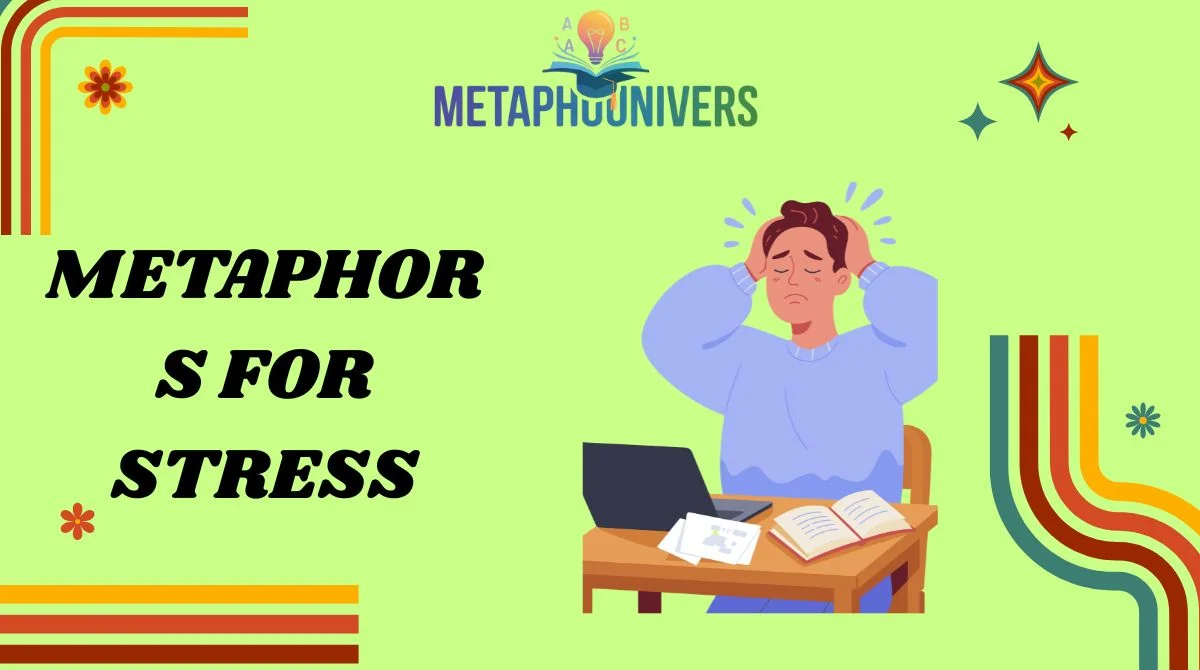
Metaphors for stress help writers communicate urgency, pressure, anxiety, and resilience without simply stating, “I feel overwhelmed.”
They provide emotional texture. They invite readers to feel the weight rather than merely read about it. Symbolically, stress can represent growth, danger, expectation, ambition, or survival.
In storytelling, poetry, essays, and speeches, stress metaphors turn abstract tension into lived experience.
Whether you are crafting fiction, journaling your thoughts, or delivering a keynote speech, the right metaphor can illuminate the psychological landscape of pressure. This guide explores original, vivid metaphors that elevate your writing and deepen emotional impact.
Understanding the Symbolism of Stress
Emotional Meaning
Stress often symbolizes internal conflict. It can represent fear of failure, desire for achievement, or the strain of responsibility. Emotionally, stress carries restlessness, urgency, doubt, and sometimes determination.
Psychological Associations
Psychologically, stress is linked to survival instincts. The body reacts as if facing a threat. Metaphors help illustrate this invisible reaction—racing thoughts, tightened muscles, shallow breathing—through imagery readers instantly grasp.
Cultural Symbolism
In modern culture, stress is frequently tied to productivity and ambition. It symbolizes the cost of success. In literature, stress often marks transformation—the hero under pressure before breakthrough.
Literary Usage
Writers use stress metaphors to:
- Build tension
- Develop character depth
- Signal internal struggle
- Foreshadow change
- Contrast chaos with calm
Nature-Based Metaphors
Stress Is a Thundercloud That Refuses to Rain
Meaning & Interpretation
This metaphor captures anticipation without release—pressure building with no resolution.
Best Used In
Poetry, reflective essays, character-driven fiction.
Example Sentence
A thundercloud hung inside her chest, rumbling but never breaking.
Why It Works
Storm imagery conveys heaviness and suspense while emphasizing emotional stagnation.
Stress Is a River After Heavy Rain
Meaning & Interpretation
Represents overflow—thoughts moving too fast to control.
Best Used In
Narrative prose and motivational speeches.
Example Sentence
His mind became a river after heavy rain, sweeping logic from its banks.
Why It Works
The rushing river mirrors racing thoughts and loss of control.
Stress Is a Forest Fire Beneath the Soil
Meaning & Interpretation
Hidden but destructive, burning quietly underground.
Best Used In
Psychological thrillers, dramatic monologues.
Example Sentence
Beneath her calm smile, a forest fire smoldered.
Why It Works
Subterranean fire suggests unseen danger and suppressed emotion.
Stress Is a Tidal Pull at Midnight
Meaning & Interpretation
A constant force tugging at stability.
Best Used In
Poetry and lyrical storytelling.
Example Sentence
At midnight, stress pulled at him like a silent tide.
Why It Works
The tide conveys inevitability and rhythmic pressure.
Emotional Metaphors
Stress Is a Tightening Violin String
Meaning & Interpretation
Pressure increasing toward a breaking point.
Best Used In
Music-themed writing, speeches, personal essays.
Example Sentence
Each deadline tightened him like a violin string stretched too far.
Why It Works
The image blends tension with fragility.
Stress Is an Unanswered Question Echoing
Meaning & Interpretation
Persistent uncertainty.
Best Used In
Academic essays, introspective prose.
Example Sentence
The future echoed in her mind like a question no one would answer.
Why It Works
Echoes symbolize repetition and mental fixation.
Stress Is a Backpack Filled with Stones
Meaning & Interpretation
Accumulated burdens.
Best Used In
Speeches, relatable storytelling.
Example Sentence
By Friday, he carried the week like a backpack filled with stones.
Why It Works
Physical weight translates emotional strain into something readers feel bodily.
Stress Is a Clock Ticking Inside the Skull
Meaning & Interpretation
Time pressure dominating thought.
Best Used In
Thrillers, exam narratives.
Example Sentence
A clock ticked inside her skull as the interview began.
Why It Works
Internalized time imagery heightens urgency.
Dark and Intense Metaphors
Stress Is a Cage Without Bars
Meaning & Interpretation
Feeling trapped without visible restraint.
Best Used In
Character studies, dramatic fiction.
Example Sentence
He paced within a cage no one else could see.
Why It Works
Invisible confinement reflects psychological entrapment.
Stress Is Static in the Brain
Meaning & Interpretation
Mental interference blocking clarity.
Best Used In
Modern prose and creative nonfiction.
Example Sentence
Her thoughts dissolved into static before the presentation.
Why It Works
Audio imagery captures cognitive overload.
Stress Is a Cracked Mirror
Meaning & Interpretation
Distorted self-perception under pressure.
Best Used In
Coming-of-age stories.
Example Sentence
Under stress, she saw herself through a cracked mirror.
Why It Works
Broken reflection symbolizes fractured confidence.
Stress Is a Storm Locked in a Bottle
Meaning & Interpretation
Suppressed intensity.
Best Used In
Poetry and emotional narratives.
Example Sentence
He carried a storm locked in a bottle behind his ribs.
Why It Works
Containment suggests both control and imminent rupture.
Hopeful and Transformative Metaphors
Stress Is Coal Becoming Diamond
Meaning & Interpretation
Pressure leading to growth.
Best Used In
Motivational writing and speeches.
Example Sentence
The pressure did not crush her; it shaped her like coal becoming diamond.
Why It Works
The transformation imagery reframes stress as constructive.
Stress Is a Forge Tempering Steel
Meaning & Interpretation
Hardship strengthening character.
Best Used In
Leadership essays.
Example Sentence
Every setback was a forge tempering his resolve.
Why It Works
Heat and shaping symbolize resilience.
Stress Is a Mountain Trail
Meaning & Interpretation
Challenging but purposeful journey.
Best Used In
Inspirational storytelling.
Example Sentence
Stress felt like a mountain trail—steep, yet leading somewhere higher.
Why It Works
Elevation suggests reward beyond struggle.
Stress Is a Seed Under Soil
Meaning & Interpretation
Hidden growth before visible change.
Best Used In
Reflective essays.
Example Sentence
The pressure was a seed under soil, preparing her for bloom.
Why It Works
Growth imagery transforms discomfort into potential.
How Writers Use These Metaphors
In novels, stress metaphors deepen character psychology and build suspense before climactic moments.
In poetry, they condense emotion into striking imagery that resonates beyond literal meaning.
In speeches, metaphors make complex feelings relatable and memorable.
In descriptive essays, they prevent flat statements and create sensory immersion.
Common Mistakes When Creating Metaphors
Cliché Imagery
Avoid overused phrases like “boiling point” unless reinvented creatively.
Mixed Metaphors
Combining unrelated images confuses readers.
Overcomplication
If readers must decode excessively, impact weakens.
Repetition Patterns
Using similar imagery repeatedly dulls emotional effect.
Practice Exercise
Fill in the Blanks
- Stress crept through his thoughts like _______.
- Her anxiety was a _______ pressing against her ribs.
- Deadlines gathered like _______.
- His mind felt like a _______ spinning too fast.
- Stress settled over the room like _______.
- The exam hung above her like _______.
- Responsibility wrapped around him like _______.
- Her worry echoed like _______.
- Pressure shaped him like _______.
- Stress rose within her like _______.
Create Your Own Metaphor
- Compare stress to a sound.
- Compare stress to a weather event.
- Compare stress to a mechanical object.
- Compare stress to an animal.
- Compare stress to a landscape.
FAQs
What is a powerful metaphor for stress?
A powerful metaphor is one that translates internal tension into vivid imagery, such as stress being a tightening violin string.
Why are metaphors effective in describing stress?
They transform invisible emotions into relatable sensory experiences.
Can stress metaphors be positive?
Yes. Some metaphors frame stress as growth, such as coal becoming diamond.
How do I avoid cliché stress metaphors?
Focus on specific, original imagery rather than familiar expressions.
Are metaphors better than similes for stress?
Metaphors often feel stronger because they directly equate one thing with another, creating immersive imagery.
Conclusion
Stress is complex, layered, and deeply human. Through metaphor, writers can transform pressure into thunderclouds, forges, tides, and seeds.
The right image does more than describe—it invites readers to step inside the emotion. Experiment boldly. Blend observation with imagination.
Let pressure become poetry.

I am David Cooper, an English language enthusiast and content creator at Metaphounivers, dedicated to simplifying grammar and vocabulary for learners worldwide. I help students build confidence and improve their communication skills through clear, practical lessons.