A metaphor is more than decorative language; it is a bridge between emotion and image.
Instead of saying what something feels like, a metaphor shows it—transforming abstract emotion into something tangible.
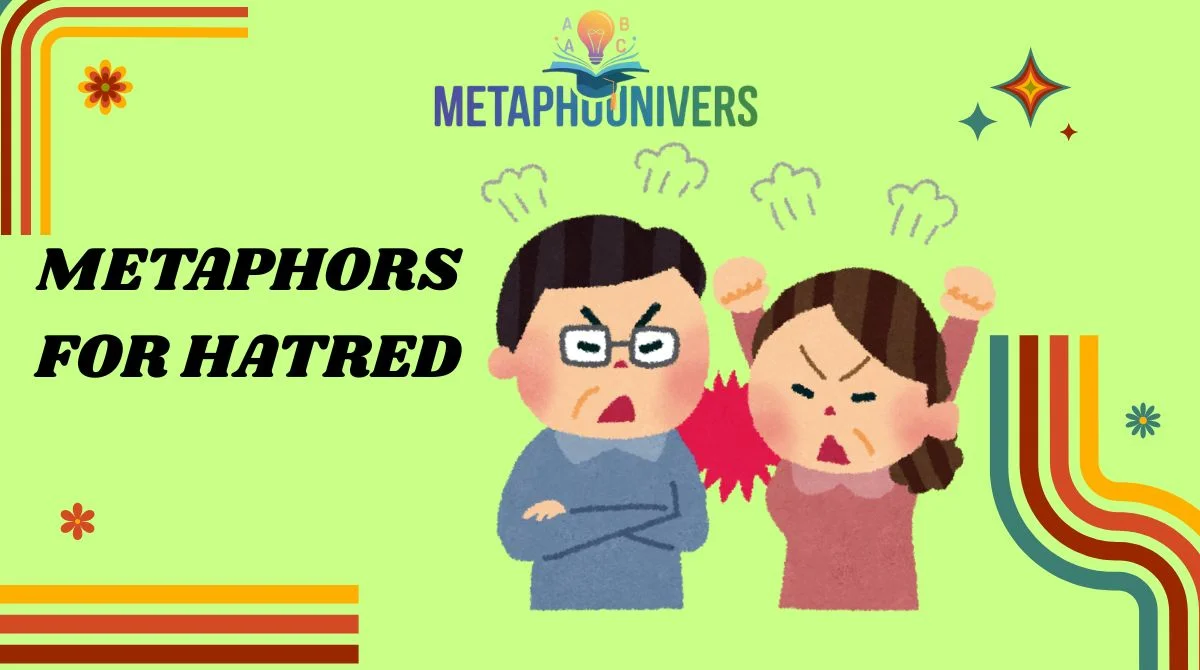
When we speak of hatred, metaphors become especially potent. Hatred is invisible, yet it can feel volcanic, corrosive, suffocating, or consuming. Through metaphor, writers give shape to that intensity.
Metaphors for hatred carry emotional and symbolic weight. They allow readers to experience hostility not just as an idea but as a living force—like a storm rolling in or a blade pressed too close.
In storytelling and poetry, such imagery deepens character conflict. In speeches, it sharpens urgency. In essays, it clarifies psychological truth.
Because hatred is complex—ranging from quiet resentment to explosive rage—the metaphors we choose determine tone, atmosphere, and meaning.
Used wisely, they can reveal pain beneath anger, history beneath resentment, and humanity beneath hostility.
Let’s explore how symbolism shapes this emotion and discover fresh metaphors you can use in your own writing.
Understanding the Symbolism of Hatred
Emotional Meaning
Hatred often grows from wounded pride, betrayal, fear, or injustice. It can be immediate like a spark or slow-building like sediment collecting at the bottom of a river.
Psychological Associations
Psychologically, hatred is linked to fixation. It narrows perception and amplifies threat. Metaphors reflecting confinement, pressure, or decay often mirror this internal tension.
Cultural Symbolism
Across cultures, hatred is symbolized by fire, poison, and darkness—forces that destroy or obscure. Some traditions portray it as a burden carried by the hater rather than the hated.
Literary Usage
In literature, hatred fuels tragedy and transformation. From ancient epics to modern novels, it acts as a catalyst—igniting wars, unraveling families, or pushing characters toward redemption.
Nature-Based Metaphors
Hatred is a Wildfire Without a Windbreak
Meaning & Interpretation: It spreads uncontrollably, consuming everything in reach.
Best Used In: Dramatic fiction, speeches.
Example Sentence: His bitterness was a wildfire without a windbreak, devouring even old friendships.
Why It Works: Fire suggests speed, destruction, and loss of control.
Hatred is Acid Rain
Meaning & Interpretation: Slow, corrosive damage that weakens structures over time.
Best Used In: Essays, reflective prose.
Example Sentence: Years of rivalry fell like acid rain on their partnership.
Why It Works: Environmental imagery highlights gradual harm.
Hatred is a Thornbush in the Garden
Meaning & Interpretation: A painful presence among beauty.
Best Used In: Poetry, allegory.
Example Sentence: Her resentment stood like a thornbush in the garden of their marriage.
Why It Works: Contrasts harmony with intrusion.
Hatred is a Drought in the Heart
Meaning & Interpretation: Emotional dryness replacing compassion.
Best Used In: Character studies.
Example Sentence: After the betrayal, a drought settled in his heart.
Why It Works: Drought evokes scarcity and lifelessness.
Hatred is a Gathering Storm Beneath the Horizon
Meaning & Interpretation: Imminent eruption.
Best Used In: Suspense narratives.
Example Sentence: Tension brewed between them like a storm beneath the horizon.
Why It Works: Suggests pressure building unseen.
Emotional Metaphors
Hatred is a Locked Room with No Windows
Meaning & Interpretation: Emotional imprisonment.
Best Used In: Psychological fiction.
Example Sentence: She lived in a locked room with no windows, built from old grudges.
Why It Works: Conveys confinement and isolation.
Hatred is a Rusting Chain
Meaning & Interpretation: Bondage that deteriorates both holder and captive.
Best Used In: Motivational writing.
Example Sentence: His hatred became a rusting chain around his own wrists.
Why It Works: Suggests mutual damage.
Hatred is a Mirror That Distorts Faces
Meaning & Interpretation: Warps perception of others.
Best Used In: Essays, speeches.
Example Sentence: Through hatred’s mirror, every gesture looked like an insult.
Why It Works: Highlights psychological distortion.
Hatred is a Splinter Under the Skin
Meaning & Interpretation: Small but constant irritation.
Best Used In: Short stories.
Example Sentence: The insult lingered like a splinter under her skin.
Why It Works: Physical discomfort mirrors emotional irritation.
Hatred is an Echo That Refuses to Fade
Meaning & Interpretation: Persistent memory of harm.
Best Used In: Poetry.
Example Sentence: His anger echoed long after the argument ended.
Why It Works: Sound imagery conveys repetition.
Dark and Intense Metaphors
Hatred is a Blade with No Handle
Meaning & Interpretation: Hurts the wielder as well.
Best Used In: Tragic narratives.
Example Sentence: He gripped hatred like a blade with no handle.
Why It Works: Suggests self-inflicted harm.
Hatred is Black Ice on the Road
Meaning & Interpretation: Hidden danger causing sudden collapse.
Best Used In: Modern fiction.
Example Sentence: Their polite smiles hid black ice beneath the surface.
Why It Works: Invisible threat imagery.
Hatred is a Grave Dug Before Death
Meaning & Interpretation: Prepares destruction in advance.
Best Used In: Gothic prose.
Example Sentence: His prejudice was a grave dug before death arrived.
Why It Works: Morbid symbolism adds gravity.
Hatred is Smoke Filling a Closed House
Meaning & Interpretation: Suffocates clarity.
Best Used In: Drama.
Example Sentence: Accusations spread like smoke in a closed house.
Why It Works: Claustrophobic atmosphere.
Hatred is a Parasite Feeding on Memory
Meaning & Interpretation: Sustains itself on past pain.
Best Used In: Literary fiction.
Example Sentence: His hatred fed like a parasite on remembered humiliation.
Why It Works: Biological imagery shows dependency.
Hopeful or Transformative Metaphors
Hatred is Unrefined Ore
Meaning & Interpretation: Raw emotion that can be reshaped.
Best Used In: Inspirational essays.
Example Sentence: Her anger was unrefined ore waiting to become resolve.
Why It Works: Suggests potential transformation.
Hatred is a Bridge Half-Built
Meaning & Interpretation: Connection interrupted.
Best Used In: Relationship narratives.
Example Sentence: Their feud stood like a bridge half-built across a river.
Why It Works: Implies possibility of repair.
Hatred is Winter Before the Thaw
Meaning & Interpretation: A temporary emotional season.
Best Used In: Poetry.
Example Sentence: Their silence felt like winter before the thaw.
Why It Works: Seasonal cycles imply change.
Hatred is a Shadow Cast by Hurt
Meaning & Interpretation: Result rather than origin.
Best Used In: Counseling contexts.
Example Sentence: His hostility was only the shadow cast by hurt.
Why It Works: Reframes hatred as secondary.
How Writers Use These Metaphors
In novels, hatred metaphors heighten conflict and deepen character psychology.
In poetry, they compress emotion into vivid symbols, allowing layered meaning.
In speeches, they energize audiences and clarify moral stakes.
In descriptive essays, they transform abstract hostility into sensory experience.
Common Mistakes When Creating Metaphors
Cliché imagery such as overused flames or darkness.
Blending unrelated images that confuse readers.
Making metaphors overly complex or difficult to decode.
Repeating the same sensory pattern repeatedly.
Practice Exercise
Fill in the Blanks
- Hatred is a ______ slowly cracking the foundation.
- His anger moved like ______ through dry grass.
- Their feud sat between them like ______.
- Bitterness tasted like ______.
- Her resentment echoed like ______.
- Hatred wrapped around him like ______.
- Prejudice spread like ______.
- Anger stood like ______ in the doorway.
- His hostility felt like ______ pressing inward.
- Their rivalry grew like ______ in the dark.
Create Your Own Metaphor
- Compare hatred to a mechanical object.
- Compare hatred to weather without using “storm.”
- Compare hatred to a sound.
- Compare hatred to a historical event.
- Compare hatred to something fragile.
FAQs
What makes a strong metaphor for hatred?
Clarity, emotional precision, and imagery that aligns with the tone of your writing.
Are fire metaphors overused for hatred?
They can be, unless refreshed with specific, original detail.
Can hatred metaphors be positive?
Yes. Some highlight transformation or healing potential.
How do I avoid cliché imagery?
Draw from unique experiences, sensory detail, and unexpected comparisons.
Should metaphors be simple or complex?
Simple metaphors often carry stronger impact when they’re precise.
Conclusion
Metaphors give hatred a body, a sound, a texture. They turn an abstract emotion into something readers can see and feel.
Whether you depict it as corrosion, confinement, shadow, or transformation, the key is intention. Choose imagery that reflects the psychological truth of your characters or message.
When crafted with originality, metaphors do more than describe hatred—they illuminate it, challenge it, and sometimes even soften it.

I am David Cooper, an English language enthusiast and content creator at Metaphounivers, dedicated to simplifying grammar and vocabulary for learners worldwide. I help students build confidence and improve their communication skills through clear, practical lessons.