Metaphors are the secret passageways of language. They allow writers to compare one thing to another in a way that sparks emotion, paints imagery, and deepens meaning without directly explaining it.
Instead of saying a book is “interesting,” a metaphor can transform it into a lantern in a storm, a sleeping volcano, or a stitched map of human souls.
These comparisons make writing memorable because they speak to imagination rather than plain description.
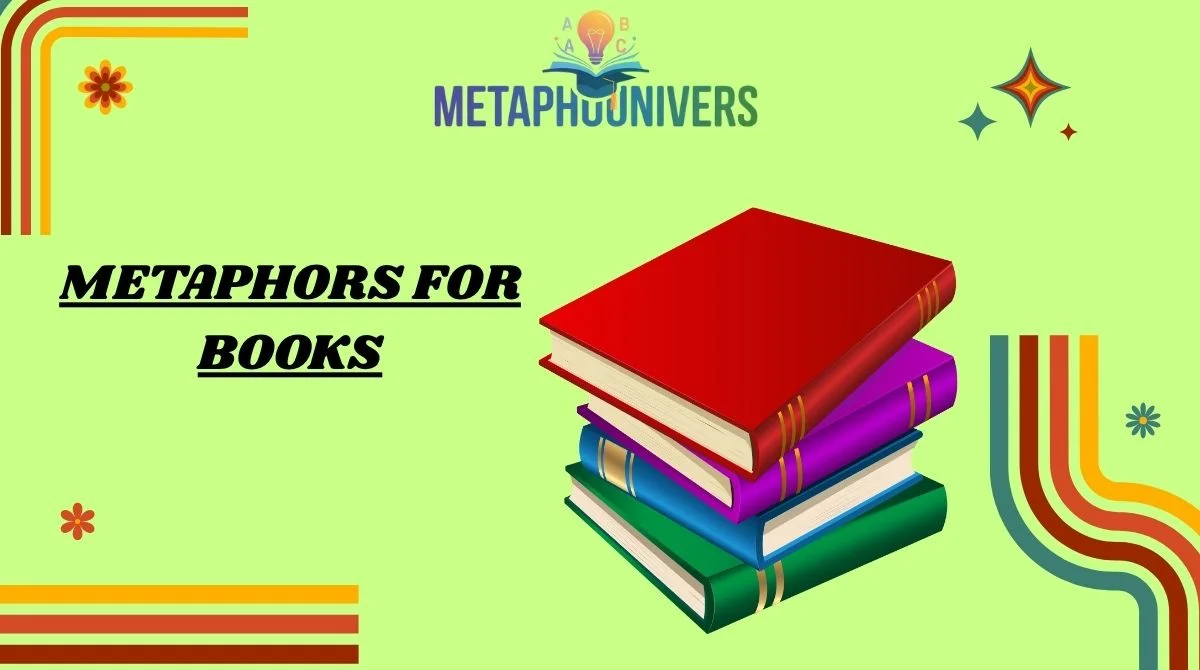
Books themselves are rich symbolic objects. They hold memories, histories, dreams, and revolutions between their covers.
A single metaphor for books can express comfort, danger, wisdom, escape, loneliness, or transformation. That is why writers, poets, teachers, and speakers often rely on book metaphors to create emotional resonance.
In literature, metaphors for books help readers feel the weight of knowledge, the magic of storytelling, and the intimacy between author and reader.
Some metaphors portray books as living companions, while others reveal them as mirrors, prisons, or gateways.
The beauty lies in interpretation. A carefully chosen metaphor can turn an ordinary sentence into something hauntingly beautiful and unforgettable.
Understanding the Symbolism of Books
Books symbolize far more than printed pages. Emotionally, they often represent comfort, curiosity, or personal escape. Many readers associate books with quiet safety, childhood wonder, or intellectual freedom. A novel can become a sanctuary during difficult moments, which is why books are frequently compared to shelters, fires, or guiding stars.
Psychologically, books are linked to growth and identity. People often discover new beliefs, emotions, and perspectives through reading. In this sense, books act like mirrors reflecting the self or windows revealing unfamiliar worlds.
Culturally, books symbolize wisdom, civilization, and preserved memory. Ancient societies treated books as sacred treasures because they carried history and philosophy across generations. Even today, libraries are viewed as symbols of collective human knowledge.
In literature, books are often used metaphorically to represent journeys, hidden truths, emotional landscapes, or transformation. Writers use these symbolic meanings to add depth and emotional complexity to storytelling.
Nature-Based Metaphors
A Book Is a Forest of Whispering Trees
Meaning & Interpretation
This metaphor suggests that every page contains hidden voices, secrets, and layered stories waiting to be discovered.
Best Used In
Fantasy writing, reflective essays, poetic storytelling.
Example Sentence
“The old novel felt like a forest of whispering trees, each chapter rustling with forgotten memories.”
Why It Works
Forests evoke mystery and exploration, making readers imagine wandering deeper into knowledge and imagination.
A Book Is an Ocean Without Shores
Meaning & Interpretation
Books often feel endless in emotional and intellectual depth.
Best Used In
Inspirational speeches, literary analysis, poetry.
Example Sentence
“Her library became an ocean without shores where curiosity could sail forever.”
Why It Works
The vastness of the sea mirrors the limitless possibilities inside literature.
A Book Is a Seed Buried in the Mind
Meaning & Interpretation
A powerful story plants ideas that continue growing long after reading ends.
Best Used In
Educational writing, motivational essays.
Example Sentence
“That memoir was a seed buried in the mind, slowly blooming into empathy.”
Why It Works
Seeds symbolize potential and transformation, making the metaphor emotionally rich.
A Book Is a Mountain Trail
Meaning & Interpretation
Reading becomes a journey filled with obstacles, discoveries, and breathtaking revelations.
Best Used In
Adventure narratives, academic essays.
Example Sentence
“The biography unfolded like a mountain trail leading toward hard-earned wisdom.”
Why It Works
Mountain imagery reflects effort, endurance, and reward.
Emotional Metaphors
A Book Is a Warm Fireplace in Winter
Meaning & Interpretation
Books can offer emotional comfort during loneliness or hardship.
Best Used In
Personal essays, emotional storytelling.
Example Sentence
“During difficult nights, poetry became a warm fireplace in winter.”
Why It Works
The imagery creates immediate feelings of safety and emotional warmth.
A Book Is a Silent Friend
Meaning & Interpretation
Books accompany readers without judgment or interruption.
Best Used In
Memoirs, reflective writing.
Example Sentence
“The battered paperback remained a silent friend through every season of his life.”
Why It Works
The metaphor humanizes books, creating intimacy between reader and story.
A Book Is a Heartbeat Trapped in Paper
Meaning & Interpretation
Every story carries human emotion and living passion.
Best Used In
Poetry, literary criticism.
Example Sentence
“The diary felt like a heartbeat trapped in paper.”
Why It Works
Heartbeat imagery instantly suggests life, vulnerability, and emotional intensity.
Dark and Intense Metaphors
A Book Is a Locked Coffin of Secrets
Meaning & Interpretation
Some books contain hidden truths, painful memories, or dangerous ideas.
Best Used In
Thrillers, gothic fiction.
Example Sentence
“The journal rested on the shelf like a locked coffin of secrets.”
Why It Works
The contrast between silence and hidden darkness creates suspense.
A Book Is a Storm Caged in Ink
Meaning & Interpretation
Stories can hold chaos, rebellion, or emotional violence beneath calm pages.
Best Used In
Political essays, dramatic fiction.
Example Sentence
“The revolutionary novel was a storm caged in ink.”
Why It Works
Storm imagery conveys raw energy and emotional force.
A Book Is a Labyrinth Without Exit
Meaning & Interpretation
Complex books can consume readers intellectually and emotionally.
Best Used In
Psychological fiction, literary essays.
Example Sentence
“The philosopher’s writings became a labyrinth without exit.”
Why It Works
Labyrinths symbolize confusion, obsession, and deep contemplation.
Hopeful and Positive Metaphors
A Book Is a Lantern in Darkness
Meaning & Interpretation
Books guide people through uncertainty and ignorance.
Best Used In
Motivational speeches, educational writing.
Example Sentence
“For struggling students, literature became a lantern in darkness.”
Why It Works
Light symbolizes hope, wisdom, and direction.
A Book Is a Bridge Between Souls
Meaning & Interpretation
Stories connect human experiences across cultures and generations.
Best Used In
Cultural essays, speeches.
Example Sentence
“Great novels act as bridges between souls separated by centuries.”
Why It Works
Bridges symbolize connection and understanding.
A Book Is a Key to Invisible Doors
Meaning & Interpretation
Reading unlocks opportunities, imagination, and hidden perspectives.
Best Used In
Inspirational content, educational discussions.
Example Sentence
“Science fiction became a key to invisible doors inside her imagination.”
Why It Works
Keys suggest discovery, freedom, and possibility.
Poetic and Romantic Metaphors
A Book Is a Love Letter to Humanity
Meaning & Interpretation
Books preserve emotions, dreams, and shared human experiences.
Best Used In
Romantic essays, literary commentary.
Example Sentence
“The novel felt like a love letter to humanity’s fragile spirit.”
Why It Works
The metaphor adds tenderness and emotional depth.
A Book Is Moonlight Folded Into Pages
Meaning & Interpretation
Books possess quiet beauty and gentle emotional power.
Best Used In
Poetry, lyrical prose.
Example Sentence
“The poetry collection resembled moonlight folded into pages.”
Why It Works
Moonlight creates elegance, softness, and mystery.
A Book Is a Garden of Sleeping Dreams
Meaning & Interpretation
Stories hold imagination waiting to awaken within readers.
Best Used In
Fantasy writing, creative essays.
Example Sentence
“The children’s library looked like a garden of sleeping dreams.”
Why It Works
Gardens symbolize beauty, growth, and hidden life.
Dramatic and Powerful Metaphors
A Book Is a Battlefield of Ideas
Meaning & Interpretation
Books often contain conflicting beliefs, philosophies, and emotional struggles.
Best Used In
Debates, analytical essays.
Example Sentence
“The political manifesto became a battlefield of ideas.”
Why It Works
Battlefield imagery emphasizes tension and intellectual conflict.
A Book Is a Time Machine Made of Words
Meaning & Interpretation
Reading transports people across centuries and civilizations.
Best Used In
Historical writing, speeches.
Example Sentence
“Every historical novel became a time machine made of words.”
Why It Works
The metaphor highlights the transporting power of storytelling.
A Book Is a Compass for the Lost
Meaning & Interpretation
Books can guide people emotionally or morally during uncertain times.
Best Used In
Self-improvement essays, inspirational literature.
Example Sentence
“During grief, philosophy served as a compass for the lost.”
Why It Works
Compasses symbolize guidance, direction, and survival.
A Book Is a Sleeping Volcano
Meaning & Interpretation
Some stories appear calm until their emotional impact erupts unexpectedly.
Best Used In
Dramatic fiction, reviews.
Example Sentence
“The final chapters revealed the novel as a sleeping volcano.”
Why It Works
Volcano imagery conveys hidden emotional intensity and explosive revelation.
How Writers Use These Metaphors
In Novels
Novelists use book metaphors to deepen themes and reveal character emotions. A character describing books as “lifeboats” immediately suggests emotional survival and loneliness.
In Poetry
Poets rely on condensed imagery. A metaphor such as “moonlight folded into pages” creates beauty and symbolism in very few words.
In Speeches
Public speakers use metaphors to make ideas memorable. Comparing books to lanterns or bridges makes educational messages emotionally persuasive.
In Descriptive Essays
Essay writers use metaphors to transform ordinary descriptions into vivid experiences that engage readers more deeply.
Common Mistakes When Creating Metaphors
Using Overused Imagery
Repeated clichés weaken originality. Comparisons like “books are treasures” feel predictable unless refreshed with unique imagery.
Mixing Unrelated Metaphors
Combining conflicting comparisons can confuse readers. Avoid blending unrelated symbols in the same sentence.
Making Metaphors Too Complicated
If readers struggle to understand the comparison, the emotional effect disappears. Clarity matters.
Repeating Similar Language Patterns
Using the same descriptive style repeatedly can make writing feel mechanical. Vary imagery, tone, and emotional direction.
Practice Exercise
Fill in the Blanks
- The novel was a __________ guiding her through sorrow.
- His journal became a __________ of hidden regrets.
- Poetry is a __________ where emotions bloom quietly.
- The library stood like a __________ of forgotten voices.
- That memoir became a __________ across generations.
- The textbook acted as a __________ unlocking new worlds.
- Her favorite story remained a __________ during lonely winters.
- The fantasy saga felt like a __________ without boundaries.
- Ancient manuscripts were __________ buried beneath history.
- The final chapter exploded like a __________ awakening.
Create Your Own Metaphor
- Compare a childhood book to a natural object.
- Create a metaphor for a dangerous story.
- Describe a romance novel using celestial imagery.
- Invent a metaphor for a life-changing autobiography.
- Compare a library to something unexpected and symbolic.
FAQs
Why are metaphors important in writing?
Metaphors create emotional depth, visual imagery, and memorable language that make writing more engaging.
What makes a good metaphor for books?
A strong metaphor connects books to emotions, experiences, or symbols readers instantly recognize and feel.
Can metaphors improve storytelling?
Yes. Metaphors add atmosphere, reveal themes, and strengthen emotional impact in narratives.
How do poets create original metaphors?
Poets often combine unexpected imagery with emotional truth to create fresh and meaningful comparisons.
Should metaphors always be symbolic?
Not always. Some metaphors focus more on sensory imagery or emotional tone than deeper symbolism.
Conclusion
Metaphors give books a second life beyond paper and ink. They transform stories into forests, lanterns, storms, gardens, and bridges that readers can emotionally experience rather than simply understand.
The best metaphors do more than decorate language — they reveal hidden truths, deepen emotion, and create unforgettable imagery.
Whether you write poetry, fiction, speeches, or essays, experimenting with original metaphors can strengthen your voice and make your writing stand apart.
Explore unusual comparisons, trust emotional imagery, and allow imagination to shape your language into something vivid and alive.

I am David Cooper, an English language enthusiast and content creator at Metaphounivers, dedicated to simplifying grammar and vocabulary for learners worldwide. I help students build confidence and improve their communication skills through clear, practical lessons.