A metaphor is more than decorative language — it is a bridge between the invisible and the imaginable.
It allows us to translate complex internal experiences into images the mind can grasp.
When we speak about mental health, we are often trying to describe something intangible: moods shifting without warning, resilience rebuilding after collapse, thoughts spiraling beyond control.
Literal language sometimes fails us. Metaphor steps in.
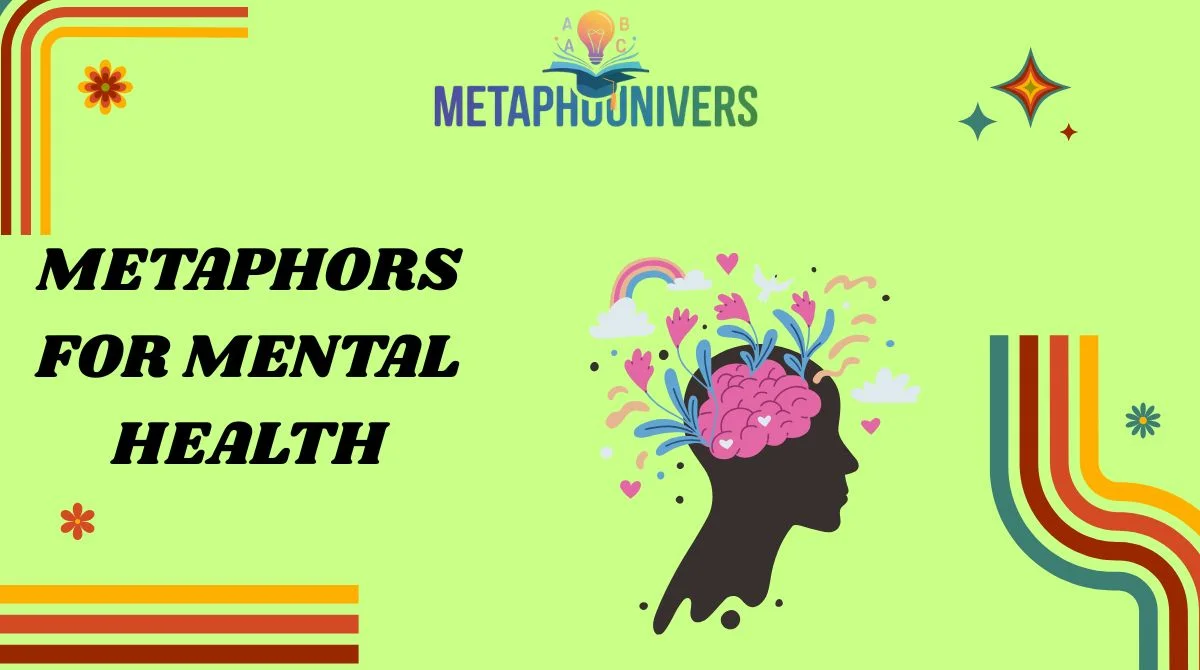
Metaphors for mental health carry emotional weight and symbolic depth. They turn anxiety into weather, depression into landscape, healing into architecture.
They help writers, therapists, speakers, and storytellers articulate experiences that otherwise feel wordless. In literature, metaphor creates empathy; in daily life, it creates understanding.
In this 2k26 guide, you’ll discover imaginative and original metaphors for mental health — categorized, interpreted, and ready to elevate your poetry, essays, speeches, or fiction.
Understanding the Symbolism of Mental Health
Emotional Meaning
Mental health symbolizes balance, disruption, resilience, vulnerability, clarity, and confusion. It reflects the inner climate of a person’s emotional world — sometimes calm, sometimes chaotic.
Psychological Associations
It is linked to cognitive patterns, trauma, healing, growth, and identity formation. Metaphors help externalize these processes, making them safer to explore.
Cultural Symbolism
Across cultures, mental states are often compared to nature, light, shadow, or journey. Storms, deserts, and oceans frequently represent struggle; sunrise and gardens symbolize recovery.
Literary Usage
Writers use mental health metaphors to:
- Build atmosphere
- Reveal character psychology
- Deepen reader empathy
- Symbolize transformation
Nature-Based Metaphors
The Mind Is an Untamed Forest
Meaning & Interpretation: Thoughts grow wild, some nourishing, some invasive. Paths can be lost or rediscovered.
Best Used In: Psychological fiction, reflective essays.
Example Sentence: Her mind was an untamed forest where whispers and wolves shared the same trail.
Why It Works: Forest imagery evokes complexity, depth, and mystery.
Anxiety Is a Lightning Storm
Meaning & Interpretation: Sudden, electrifying surges of fear.
Best Used In: Personal narratives, spoken word poetry.
Example Sentence: Anxiety cracked through his chest like a lightning storm splitting the sky.
Why It Works: The unpredictability mirrors panic’s intensity.
Depression Is a Sunless Winter
Meaning & Interpretation: A prolonged emotional coldness without warmth.
Best Used In: Memoirs, emotional essays.
Example Sentence: She lived inside a sunless winter, where even hope wore layers.
Why It Works: Seasonal imagery conveys duration and heaviness.
Healing Is a Slow Sunrise
Meaning & Interpretation: Gradual return of clarity and warmth.
Best Used In: Motivational speeches, recovery stories.
Example Sentence: Healing rose like a slow sunrise, patient and unstoppable.
Why It Works: Sunrise symbolizes renewal and inevitability.
Trauma Is a Fault Line Beneath the Surface
Meaning & Interpretation: Hidden instability that can shake unexpectedly.
Best Used In: Literary fiction.
Example Sentence: Beneath his calm voice lay a fault line waiting for tremors.
Why It Works: Geological imagery captures buried tension.
Emotional Metaphors
The Heart Is a Locked Library
Meaning & Interpretation: Memories stored but inaccessible.
Best Used In: Poetry.
Example Sentence: Her heart was a locked library filled with unwritten apologies.
Why It Works: Libraries symbolize knowledge and hidden narratives.
Overthinking Is a Broken Record
Meaning & Interpretation: Repetitive intrusive thoughts.
Best Used In: Blogs, mental health awareness articles.
Example Sentence: His doubts played like a broken record no hand could lift.
Why It Works: Auditory imagery mirrors mental loops.
Burnout Is an Empty Battery
Meaning & Interpretation: Exhaustion beyond simple tiredness.
Best Used In: Workplace essays, motivational talks.
Example Sentence: By Friday, she was an empty battery blinking red.
Why It Works: Modern imagery resonates universally.
Self-Doubt Is a Shadow at Noon
Meaning & Interpretation: Persistent insecurity even in success.
Best Used In: Speeches, character studies.
Example Sentence: Even at his triumph, self-doubt stood like a shadow at noon.
Why It Works: Shadows symbolize inescapable presence.
Grief Is a Tidal Pull
Meaning & Interpretation: Waves of emotion returning unpredictably.
Best Used In: Memoirs, elegies.
Example Sentence: Grief pulled at her ankles like a tide that refused retreat.
Why It Works: Oceanic imagery captures recurrence.
Dark & Intense Metaphors
Panic Is a Cage of Glass
Meaning & Interpretation: Feeling trapped while others see through you.
Best Used In: Dramatic fiction.
Example Sentence: He gasped inside a cage of glass no one else could see.
Why It Works: Transparency with confinement adds tension.
Depression Is a Collapsing Bridge
Meaning & Interpretation: Loss of connection to others or oneself.
Best Used In: Literary novels.
Example Sentence: The bridge between who she was and who she felt collapsed overnight.
Why It Works: Bridges symbolize stability and access.
Intrusive Thoughts Are Uninvited Guests
Meaning & Interpretation: Ideas entering without consent.
Best Used In: Educational articles.
Example Sentence: Uninvited guests rearranged the furniture of his peace.
Why It Works: Social metaphor makes abstract distress relatable.
Trauma Is a Locked Room With Echoes
Meaning & Interpretation: Past events reverberating in silence.
Best Used In: Psychological drama.
Example Sentence: She carried a locked room where echoes never faded.
Why It Works: Sound imagery deepens emotional impact.
Despair Is a Bottomless Well
Meaning & Interpretation: Feeling there is no escape.
Best Used In: Gothic poetry.
Example Sentence: His hope fell into a bottomless well without a sound.
Why It Works: Vertical imagery implies depth and isolation.
Hopeful & Positive Metaphors
Resilience Is a Bamboo Stem
Meaning & Interpretation: Bends without breaking.
Best Used In: Inspirational writing.
Example Sentence: She stood like bamboo, yielding but unbroken.
Why It Works: Flexibility symbolizes strength.
Therapy Is a Lighthouse
Meaning & Interpretation: Guidance during internal storms.
Best Used In: Advocacy speeches.
Example Sentence: Therapy became the lighthouse that steadied his voyage.
Why It Works: Navigation imagery evokes safety.
Growth Is a Rebuilt Garden
Meaning & Interpretation: Healing after damage.
Best Used In: Reflective essays.
Example Sentence: After the fire, she planted a rebuilt garden inside herself.
Why It Works: Gardens symbolize cultivation and care.
Self-Acceptance Is a Warm Hearth
Meaning & Interpretation: Inner comfort and belonging.
Best Used In: Personal development content.
Example Sentence: He found a warm hearth within his own name.
Why It Works: Domestic imagery conveys safety.
Recovery Is a Mountain Path
Meaning & Interpretation: Challenging but upward.
Best Used In: Motivational storytelling.
Example Sentence: Recovery was a mountain path carved step by step.
Why It Works: Climbing implies effort and achievement.
How Writers Use These Metaphors
In Novels
They reveal character psychology without blunt exposition.
In Poetry
They compress emotion into vivid imagery.
In Speeches
They create shared understanding and relatability.
In Descriptive Essays
They transform clinical language into human experience.
Common Mistakes When Creating Metaphors
Cliché Imagery
Avoid overused phrases like “dark cloud” unless reinvented.
Mixed Metaphors
Do not blend unrelated imagery (storm + maze + ocean in one line).
Overcomplication
Clarity strengthens metaphorical power.
Repetition Patterns
Vary imagery fields — don’t rely only on weather or darkness.
Practice Exercise
Fill in the Blanks
- Anxiety felt like a ______ shaking the windows of his mind.
- Her healing unfolded like a ______ at dawn.
- Burnout drained him like a ______ without fuel.
- Grief returned like a ______ against stone.
- Self-worth grew like a ______ in spring.
- Trauma lingered like a ______ beneath the floorboards.
- Hope flickered like a ______ in wind.
- Overthinking spun like a ______ with no exit.
- Resilience stood like a ______ in the storm.
- Recovery climbed like a ______ toward light.
Create Your Own Metaphor
- Describe anxiety without mentioning weather.
- Compare therapy to an object in a house.
- Create a metaphor for burnout using technology.
- Write a hopeful metaphor using travel imagery.
- Invent a metaphor that shows both struggle and strength.
FAQs
What are metaphors for mental health?
They are figurative comparisons that help describe emotional and psychological experiences.
Why are metaphors powerful in mental health writing?
They translate invisible feelings into images readers can visualize and understand.
Can metaphors improve storytelling?
Yes. They deepen emotional resonance and build symbolic layers.
How do I avoid cliché mental health metaphors?
Combine unexpected imagery with precise emotion.
Are metaphors useful in speeches about mental health?
Absolutely. They build empathy and clarity.
Conclusion
Metaphors give language to the unseen architecture of the mind. They soften difficult truths, illuminate hidden wounds, and celebrate resilience.
Whether you’re writing poetry, crafting a speech, or exploring personal reflection, these metaphors for mental health can deepen your message and expand emotional connection.
Use them boldly. Adapt them creatively. Let imagery become a bridge between silence and understanding.

I am David Cooper, an English language enthusiast and content creator at Metaphounivers, dedicated to simplifying grammar and vocabulary for learners worldwide. I help students build confidence and improve their communication skills through clear, practical lessons.