A metaphor is more than a decorative phrase — it is a bridge between the visible world and invisible meaning.
When we say “time is a thief” or “hope is a sunrise,” we are translating experience into imagery. Metaphors allow language to breathe.
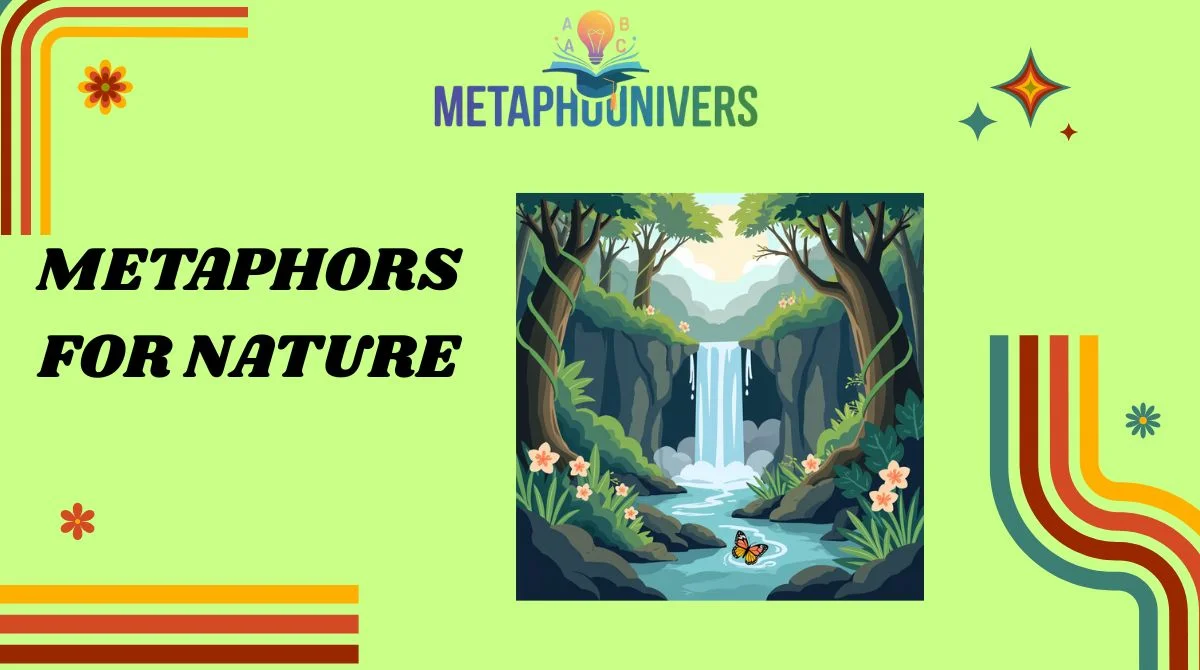
When it comes to nature, metaphors become especially powerful. Nature is not just scenery; it is memory, instinct, rhythm, and emotion wrapped into landscapes.
A forest can symbolize uncertainty. An ocean can echo longing. A mountain may represent ambition or resistance. Writers turn to nature because it carries emotional and symbolic depth that feels universal yet personal.
Metaphors for nature enrich storytelling, sharpen poetry, deepen speeches, and bring essays alive. They awaken the senses while guiding readers toward reflection. In this guide, you’ll discover imaginative, original metaphors for nature — each explained, contextualized, and ready to elevate your writing.
Understanding the Symbolism of Nature
Emotional Meaning
Nature often mirrors human emotion. Storms reflect turmoil. Calm waters suggest clarity. Blooming fields symbolize renewal. Because humans evolved within natural environments, these associations feel instinctive.
Psychological Associations
Psychologically, natural imagery evokes grounding and introspection. Forests can represent the subconscious — layered, mysterious, alive with hidden movement. Deserts often symbolize isolation or inner searching. Mountains embody perseverance and the pursuit of growth.
Cultural Symbolism
Across cultures, nature holds sacred value. In many Indigenous traditions, the earth is a living relative. In Eastern philosophy, elements like water and wind symbolize harmony and balance. In Western literature, seasonal change often mirrors human life stages.
Literary Usage
From classical epics to modern novels, writers use nature metaphorically to:
- Reflect a character’s inner state
- Foreshadow transformation
- Represent societal change
- Explore existential themes
Nature is not background — it is narrative energy.
Nature-Based Metaphors
The Forest Is a Library of Whispers
Meaning & Interpretation: Nature holds ancient knowledge, unspoken yet present.
Best Used In: Literary fiction, reflective essays
Example Sentence: She walked beneath the trees, listening as the forest opened its quiet library around her.
Why It Works: It frames nature as intelligent and layered, suggesting wisdom without stating it directly.
The Ocean Is a Breathing Giant
Meaning & Interpretation: Nature possesses power, rhythm, and unpredictable force.
Best Used In: Adventure writing, poetry
Example Sentence: The ocean inhaled against the shore, a restless giant dreaming in blue.
Why It Works: The image gives scale and movement, turning water into a living presence.
The Mountain Is a Silent Judge
Meaning & Interpretation: Nature observes human ambition without interference.
Best Used In: Inspirational speeches, memoirs
Example Sentence: The mountain stood as a silent judge, measuring my courage with every step.
Why It Works: It suggests challenge and accountability through stillness.
The River Is a Silver Thread Sewing the Earth
Meaning & Interpretation: Nature connects landscapes and lives.
Best Used In: Descriptive essays
Example Sentence: A silver thread stitched the valley together, pulling villages into one story.
Why It Works: The sewing imagery implies unity and continuity.
The Sky Is an Unfinished Canvas
Meaning & Interpretation: Nature is constantly evolving.
Best Used In: Creative nonfiction, journaling
Example Sentence: At dusk, the sky became an unfinished canvas waiting for bold strokes of fire.
Why It Works: It highlights movement and artistry in natural cycles.
Emotional Metaphors
Nature Is a Mirror Without Judgment
Meaning & Interpretation: The natural world reflects emotion without criticism.
Best Used In: Personal essays
Example Sentence: By the lake, I found a mirror without judgment.
Why It Works: It connects emotional vulnerability with calm imagery.
The Wind Is a Messenger of Unspoken Thoughts
Meaning & Interpretation: Nature carries hidden feelings.
Best Used In: Poetry
Example Sentence: The wind slipped through the trees, delivering what we never dared to say.
Why It Works: It transforms movement into communication.
Autumn Is a Gentle Farewell
Meaning & Interpretation: Change can be graceful rather than tragic.
Best Used In: Reflective writing
Example Sentence: Autumn arrived like a gentle farewell, releasing what no longer belonged.
Why It Works: It softens the concept of endings.
Rain Is the Earth’s Confession
Meaning & Interpretation: Nature releases stored emotion.
Best Used In: Dramatic scenes
Example Sentence: When the rain began, it felt like the earth finally confessing its secrets.
Why It Works: It gives rainfall emotional vulnerability.
Dark and Intense Metaphors
The Storm Is a Broken Symphony
Meaning & Interpretation: Chaos has structure beneath it.
Best Used In: Gothic fiction
Example Sentence: Thunder roared like a broken symphony tearing through the valley.
Why It Works: Music imagery adds complexity to destruction.
The Desert Is a Test of Echoes
Meaning & Interpretation: Isolation magnifies inner voice.
Best Used In: Philosophical writing
Example Sentence: In the desert, every thought returned louder than before.
Why It Works: Emphasizes solitude through sound imagery.
Winter Is a Locked Door
Meaning & Interpretation: Stagnation or emotional distance.
Best Used In: Character-driven novels
Example Sentence: Winter closed around us like a locked door we couldn’t open.
Why It Works: Suggests confinement without physical barriers.
The Night Forest Is a Breathing Shadow
Meaning & Interpretation: Mystery and hidden tension.
Best Used In: Suspense stories
Example Sentence: The night forest shifted like a breathing shadow at the edge of sight.
Why It Works: Combines motion and darkness for suspense.
Hopeful and Positive Metaphors
Spring Is a Promise Written in Green
Meaning & Interpretation: Renewal and opportunity.
Best Used In: Motivational writing
Example Sentence: Spring arrived, a promise written in green across the hills.
Why It Works: Color becomes a symbol of optimism.
Sunrise Is a Second Chance
Meaning & Interpretation: Renewal after failure.
Best Used In: Speeches
Example Sentence: Each sunrise feels like a second chance waiting to be claimed.
Why It Works: Universally relatable and emotionally uplifting.
The Garden Is a Dialogue Between Patience and Hope
Meaning & Interpretation: Growth requires time and belief.
Best Used In: Essays on perseverance
Example Sentence: Her garden became a dialogue between patience and hope.
Why It Works: Abstract concepts gain form through cultivation imagery.
The Breeze Is a Soft Reminder
Meaning & Interpretation: Subtle encouragement from the world.
Best Used In: Poetry
Example Sentence: A breeze brushed my face, a soft reminder that change can be kind.
Why It Works: Gentle physical sensation conveys emotional reassurance.
The Horizon Is an Invitation
Meaning & Interpretation: Future possibilities.
Best Used In: Adventure narratives
Example Sentence: The horizon stretched wide, an invitation we couldn’t ignore.
Why It Works: Suggests openness and forward motion.
How Writers Use These Metaphors
In Novels: Authors align landscapes with character development. A shifting climate often mirrors internal conflict.
In Poetry: Nature metaphors condense emotion into sensory imagery, allowing depth within few lines.
In Speeches: Speakers use natural imagery to inspire collective hope or resilience.
In Descriptive Essays: Metaphors prevent description from becoming static by layering meaning into observation.
Common Mistakes When Creating Metaphors
Cliché Imagery
Avoid worn-out comparisons like “cold as ice” unless reinvented with fresh perspective.
Mixed Metaphors
Combining unrelated images confuses readers. Maintain one clear symbolic frame.
Overcomplication
A metaphor should illuminate, not puzzle unnecessarily.
Repetition Patterns
Using identical adjective structures weakens originality. Vary rhythm and imagery.
Practice Exercise
Fill in the Blanks
- The forest was a __________ of forgotten stories.
- Her thoughts drifted like __________ across the valley.
- The storm became a __________ shaking the horizon.
- Spring unfolded like a __________ after silence.
- The desert felt like a __________ inside my chest.
- The river moved like a __________ through memory.
- Night wrapped the city in a __________ of shadow.
- The sunrise painted a __________ across doubt.
- Autumn whispered a __________ to the trees.
- The horizon stood like a __________ waiting to open.
Create Your Own Metaphor
- Compare nature to a human emotion.
- Turn a season into a life lesson.
- Describe wind without using “air” or “breeze.”
- Create a metaphor for a forest at night.
- Compare rain to a personal transformation.
FAQs
What makes a strong metaphor for nature?
A strong metaphor connects sensory imagery with emotional meaning, offering both clarity and depth.
Why is nature commonly used in literature?
Because it is universally recognizable and symbolically rich across cultures.
Can metaphors for nature be abstract?
Yes. Nature can represent ideas like freedom, memory, time, or destiny.
How do I avoid cliché nature metaphors?
Focus on specific imagery and unexpected comparisons instead of common phrases.
Are nature metaphors effective in persuasive writing?
Absolutely. They create emotional resonance and memorable language.
Conclusion
Nature is more than scenery — it is a living vocabulary.
When you craft metaphors drawn from landscapes, seasons, and elements, you invite readers into a deeper experience of language.
Use these metaphors as inspiration, but don’t stop here.
Let your imagination wander like a river finding new paths. The most powerful metaphors are the ones only you can write.

I am David Cooper, an English language enthusiast and content creator at Metaphounivers, dedicated to simplifying grammar and vocabulary for learners worldwide. I help students build confidence and improve their communication skills through clear, practical lessons.