A metaphor is more than decorative language — it is a bridge between the known and the felt.
By comparing one thing to another, metaphors allow writers to express abstract experiences through vivid imagery. They translate emotion into something visible, touchable, and alive.
When writing about new beginnings, metaphors become especially powerful. Starting over is rarely simple; it carries fear, hope, uncertainty, and possibility all at once.
A literal description cannot always capture that layered emotional terrain. But say a new beginning is “a seed splitting the soil,” and suddenly we feel effort, patience, and quiet strength.
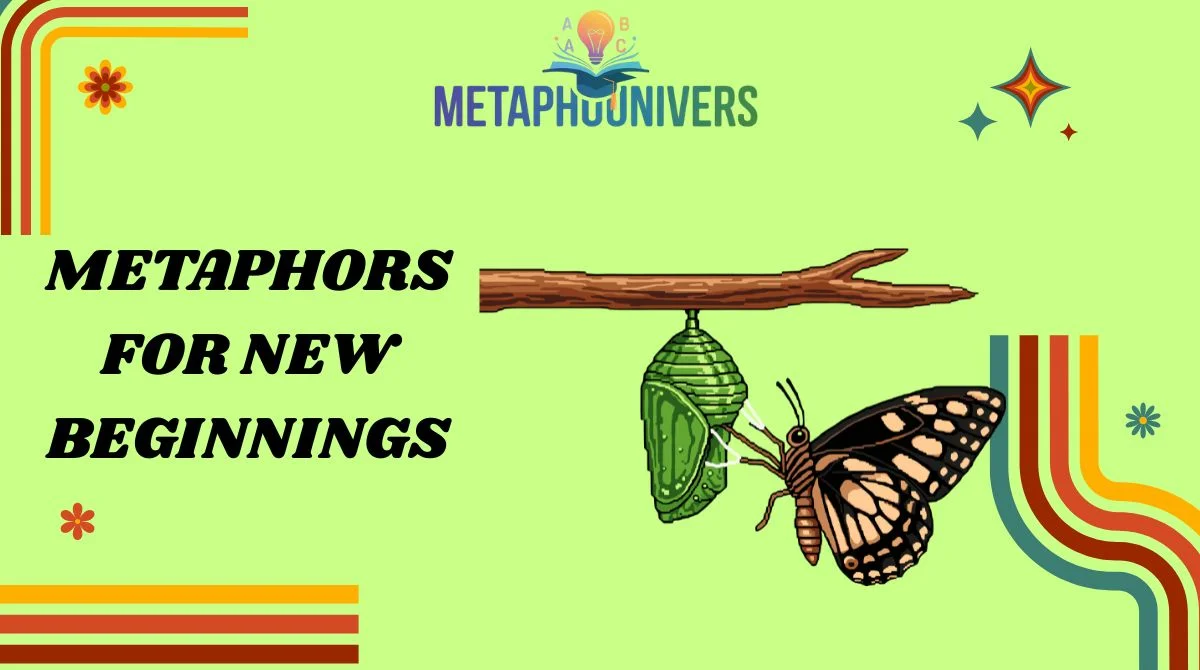
Metaphors for new beginnings hold deep symbolic value. They represent rebirth, transformation, awakening, departure, renewal, and risk.
Whether in poetry, speeches, novels, or personal essays, these metaphors allow writers to evoke courage and change without sounding predictable.
In this guide, you’ll discover original, imaginative metaphors designed to enrich your storytelling and elevate your creative voice.
Understanding the Symbolism of New Beginnings
Emotional Meaning
New beginnings often carry dual emotions — anticipation intertwined with anxiety. They symbolize movement from stagnation toward growth. Emotionally, they represent bravery, vulnerability, and resilience.
Psychological Associations
Psychologically, a new start signals identity evolution. It’s the moment someone steps beyond an old narrative and begins drafting a new one. The mind associates beginnings with motivation, uncertainty, and self-reinvention.
Cultural Symbolism
Across cultures, beginnings are tied to sunrise, spring, birth, and pilgrimage. Rituals marking transitions — graduations, weddings, migrations — highlight humanity’s deep respect for renewal.
Literary Usage
In literature, new beginnings often signal character transformation. From rebirth arcs in novels to redemption themes in speeches, they serve as narrative turning points that shift destiny.
Nature-Based Metaphors
A Seed Splitting the Earth
Meaning & Interpretation: Growth emerging through pressure; quiet strength beneath the surface.
Best Used In: Inspirational essays, reflective poetry
Example Sentence: After the failure, her confidence returned like a seed splitting the earth.
Why It Works: The image captures struggle and emergence in one motion.
The First Light After a Long Night
Meaning & Interpretation: Relief following hardship; gradual hope.
Best Used In: Speeches, memoirs
Example Sentence: His recovery felt like the first light after a long night.
Why It Works: Light naturally symbolizes renewal and visibility.
A River Finding a New Course
Meaning & Interpretation: Adaptation after disruption.
Best Used In: Storytelling, character arcs
Example Sentence: When plans collapsed, she became a river finding a new course.
Why It Works: Rivers suggest persistence without rigidity.
Spring Knocking on Frozen Doors
Meaning & Interpretation: Life returning to stillness.
Best Used In: Poetry
Example Sentence: Opportunity arrived like spring knocking on frozen doors.
Why It Works: Personification adds movement and emotional warmth.
A Phoenix Testing Its Wings
Meaning & Interpretation: Renewal after destruction.
Best Used In: Fantasy, motivational writing
Example Sentence: He stepped into his new role like a phoenix testing its wings.
Why It Works: Mythic imagery amplifies transformation.
Emotional Metaphors
Turning the Page of an Unwritten Chapter
Meaning & Interpretation: Conscious decision to move forward.
Best Used In: Personal essays
Example Sentence: She turned the page of an unwritten chapter.
Why It Works: Books symbolize narrative control.
A Heart Learning a New Rhythm
Meaning & Interpretation: Emotional recalibration.
Best Used In: Romantic writing
Example Sentence: After loss, his heart learned a new rhythm.
Why It Works: Rhythm suggests adaptation without forgetting.
Unlocking a Door Without a Map
Meaning & Interpretation: Courage in uncertainty.
Best Used In: Speeches
Example Sentence: Graduation is unlocking a door without a map.
Why It Works: Combines risk with agency.
A Compass Relearning North
Meaning & Interpretation: Identity realignment.
Best Used In: Character-driven fiction
Example Sentence: Divorce forced her compass to relearn north.
Why It Works: Direction imagery implies rediscovery.
Breathing in a Brand-New Sky
Meaning & Interpretation: Freedom and expanded perspective.
Best Used In: Travel writing
Example Sentence: Moving abroad felt like breathing in a brand-new sky.
Why It Works: Sky evokes openness and scale.
Dark or Intense Metaphors
Stepping into an Unlit Tunnel
Meaning & Interpretation: Uncertain beginnings.
Best Used In: Dramatic fiction
Example Sentence: Entrepreneurship was stepping into an unlit tunnel.
Why It Works: Darkness heightens tension.
A Storm Clearing Its Own Debris
Meaning & Interpretation: Chaos birthing clarity.
Best Used In: Transformational arcs
Example Sentence: The breakup was a storm clearing its own debris.
Why It Works: Suggests destruction as preparation.
Ashes Rearranging Themselves
Meaning & Interpretation: Reconstruction after collapse.
Best Used In: Literary prose
Example Sentence: From failure, the ashes began rearranging themselves.
Why It Works: Visual and symbolic depth.
A Clock Reset at Midnight
Meaning & Interpretation: Clean break from the past.
Best Used In: Speeches
Example Sentence: The new year felt like a clock reset at midnight.
Why It Works: Time imagery feels universal.
Hopeful or Positive Metaphors
A Garden Waiting for Footsteps
Meaning & Interpretation: Opportunity ready to bloom.
Best Used In: Inspirational writing
Example Sentence: Retirement became a garden waiting for footsteps.
Why It Works: Gardens imply nurturing potential.
Dawn Painting the Horizon Again
Meaning & Interpretation: Repeated renewal.
Best Used In: Poetry
Example Sentence: Each morning is dawn painting the horizon again.
Why It Works: Artistic imagery softens abstraction.
A Blank Canvas Breathing Possibility
Meaning & Interpretation: Creative freedom.
Best Used In: Artistic essays
Example Sentence: College felt like a blank canvas breathing possibility.
Why It Works: Suggests openness and anticipation.
The First Note of a Symphony
Meaning & Interpretation: The start of something grand.
Best Used In: Ceremonial speeches
Example Sentence: Their partnership was the first note of a symphony.
Why It Works: Music implies unfolding beauty.
A Bridge Rising from Fog
Meaning & Interpretation: Path revealed gradually.
Best Used In: Reflective writing
Example Sentence: Clarity appeared like a bridge rising from fog.
Why It Works: Merges mystery with direction.
How Writers Use These Metaphors
In novels, they signal transformation or redemption arcs.
In poetry, they compress emotion into vivid imagery.
In speeches, they inspire courage during transitions.
In descriptive essays, they add texture to personal growth narratives.
Metaphors help writers avoid flat explanations and instead evoke lived experience.
Common Mistakes When Creating Metaphors
Cliché imagery – Overused comparisons like “fresh start” without imagery lack impact.
Mixed metaphors – Blending unrelated images confuses readers.
Overcomplication – Dense symbolism can obscure meaning.
Repetition patterns – Reusing identical structure weakens originality.
Strong metaphors are precise, clear, and emotionally grounded.
Practice Exercise
Fill in the Blanks
- Her new career was a ______ breaking through stone.
- Moving cities felt like ______ under unfamiliar stars.
- The apology became ______ after years of silence.
- Graduation stood before him like ______.
- Recovery unfolded like ______.
- Their friendship restarted as ______.
- The project launch was ______.
- Freedom tasted like ______.
- The new year arrived as ______.
- Hope returned like ______.
Create Your Own Metaphor
- Compare a new beginning to a sound.
- Compare it to a journey.
- Compare it to weather.
- Compare it to architecture.
- Compare it to an object in your home.
FAQs
What makes a metaphor about new beginnings powerful?
It connects transformation to sensory imagery, making abstract change feel tangible.
How can I avoid cliché metaphors?
Focus on specific, unexpected comparisons drawn from personal observation.
Can dark metaphors represent positive change?
Yes. Intense imagery often reflects the difficulty required for growth.
Are metaphors necessary in every piece of writing?
Not always, but they elevate emotional writing and deepen reader engagement.
How many metaphors should I use in one piece?
Use them strategically. One strong metaphor often outweighs several weaker ones.
Conclusion
New beginnings deserve more than flat language.
They mark turning points, identity shifts, and emotional awakenings.
Through imaginative metaphors, writers can transform simple transitions into resonant experiences.
Let your imagery be bold, layered, and surprising. A beginning is never just a start — it is a threshold waiting to be named.

I am David Cooper, an English language enthusiast and content creator at Metaphounivers, dedicated to simplifying grammar and vocabulary for learners worldwide. I help students build confidence and improve their communication skills through clear, practical lessons.